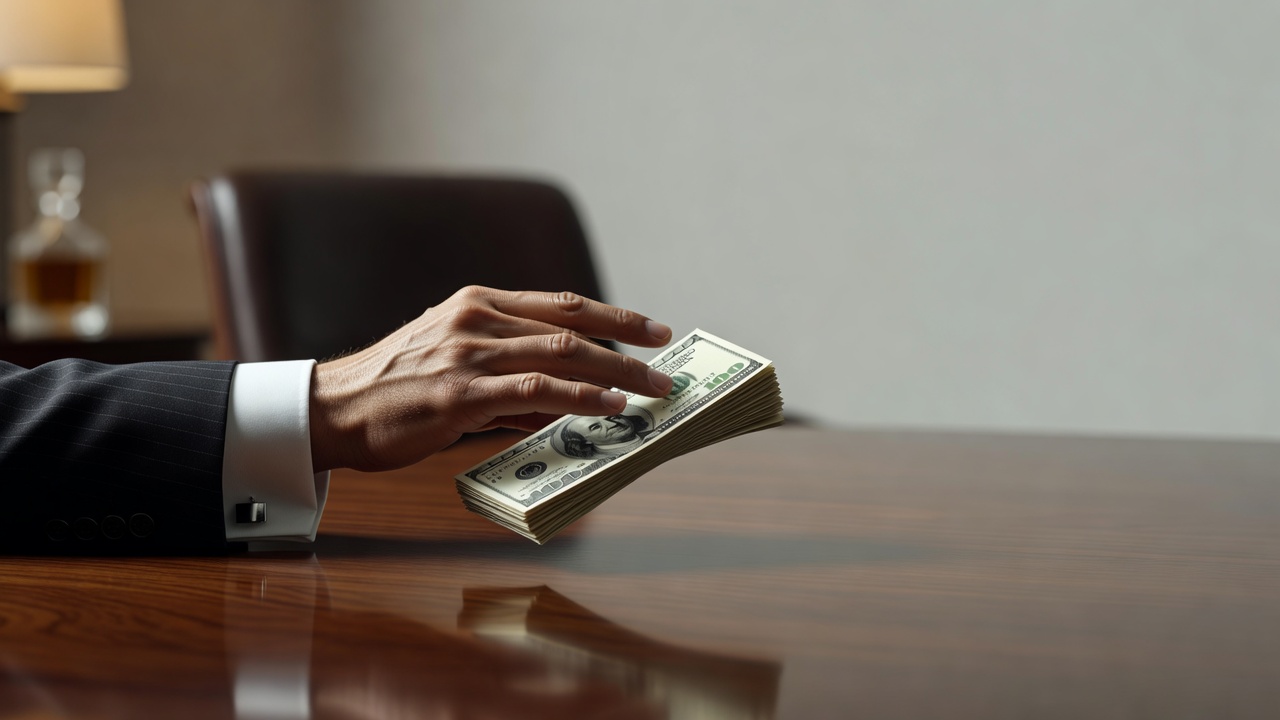
I first noticed tipping happen at a live baccarat table on a Friday night in November. A woman from Singapore had been playing for maybe two hours, taking small losses, unremarkable hands, and then she won a large one, 12,000 in chips, came from a hand where the dealer's shuffle had seemed, to my watching eye, particularly elegant. She turned to the dealer (a man named Marcus, Jamaican accent, probably forty) and pushed three green chips across the felt toward him. Five hundred. Not asked if tipping was allowed. Not mentioned it. Just moved the chips with the same casual precision she used to bet.
Marcus smiled. The smile changed something in his posture. The next hand felt different. Not rigged. Just attentive. The dealer was present in a way he hadn't quite been before.
Tipping a live dealer exists in a weird legal space. The platform (let's say DraftKings, Bet365, Pragmatic Play) doesn't technically employ Marcus directly. They license the table from a studio in Manila or Dublin. The dealer works for the studio. The player tips the dealer. Where the tip goes, what happens to it, who claims it for tax purposes, none of this is entirely clear. But it happens, routinely, and there are rules.
The Unspoken Contract
The function of a tip at a live table is not to reward past performance. It's to create a small obligation of presence. A dealer who's been tipped is subtly more invested in the outcome of the next hand. Not invested in the player winning. Invested in the interaction feeling smooth, the deal feeling clean, the table feeling like a place where things that matter are happening.
This is an economic transaction dressed as a gesture. The player tips to signal something they understand, maybe not consciously: "I recognize that you are a human performing a service. I am willing to acknowledge that. What I'm asking in return is that you meet me halfway. Be here with me."
A good dealer, asked after a session why they played a particular hand differently after a tip, would probably claim they did nothing differently. And they'd be partially honest. They didn't change the actual mechanics. They changed their attention.
The Mechanics of Tipping
Where you place the chips matters. Baccarat has a specific geometry. The banker circle, the player circle, the tie space. A tip, universally, goes into the banker circle. Not always, but the convention is that your tip goes on the banker bet. This creates a small mechanic: if the banker wins, the tip wins also. The dealer's payout comes from a hand they also bet on, symbolically.
The amount seems to follow some proportion of your win. A 5,000 win warrants 300 or 500. A 500 win warrants a single chip, maybe 25. The ratio hovers around 5 to 10 percent of the win. No one enforces this. It's simply what appears to happen at regulated tables.
At some platforms, the tip can be placed during the hand or immediately after. At others, only after. The dealer will sometimes push unwanted chips back, indicating that you've tipped too early or in violation of house protocol. Most platforms now allow you to tip through a button interface rather than physical chips, converting it to a digital transaction that's more easily tracked and taxed.
What Tipping Actually Buys
Tipping a dealer at a live table buys you a fractional improvement in the feel of the experience. The dealer becomes marginally more likely to make jokes, to acknowledge your wins with genuine enthusiasm rather than professional neutrality, to move at a pace that feels less mechanical and more conversational.
It does not buy you an advantage. The dealer cannot influence the outcome of the hand. The RNG is running independently. The cards are shuffled by a machine or, in some cases, a physical shuffle audited by the platform's technical team. The tip does not move probability. It moves attention.
In physical casinos, tipping dealers is a custom that's been happening for seventy years. The dealer is visible, physically present, a person whose effort shapes your experience. Tipping acknowledges that. In live dealer online, the separation is larger. The dealer is an image on a screen. But the labor is real. The attention is real. The interaction happens.
The Unspoken Rule
Tipping at live tables is entirely optional. No platform requires it. No dealer will be offended if you don't tip. But if you play regularly, especially if you're betting amounts that matter, tipping becomes a small ritual of respect for the person holding the cards. It's a acknowledgment that this person has chosen to work a job that consists largely of dealing cards to strangers on the internet.
Marcus knew what the tip meant. The player knew. The table, somehow, knew. The next few hands carried a slightly different energy. Not fixed. Just present. That's all a tip really does. It says: you matter. I notice you. Let's make this transaction into something slightly more than a transaction.