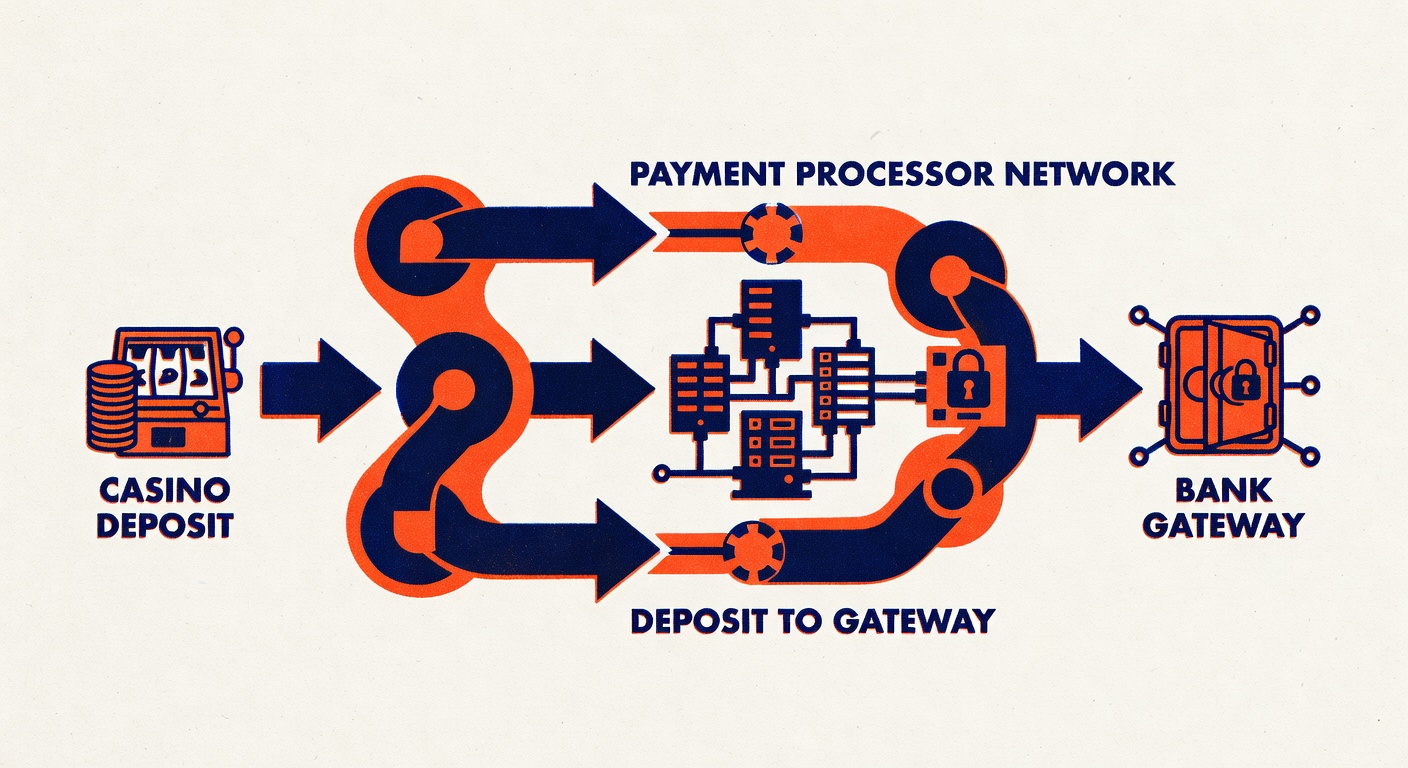
A payment processor is a service that handles money movement between entities. When you use a debit card at a casino, the card payment does not go directly from your bank to the casino. It goes through a processor.
The payment processor connects the casino to the card networks (Visa, Mastercard), your bank, and settlement systems. They authorize the charge, hold it, confirm funds availability, and route it to the casino's account.
This process takes seconds for you but involves multiple systems working in parallel.
How Processors Work
You enter your card at the casino. The casino's payment system captures the information. It sends a request to the processor.
The processor encrypts the data and sends it to the card network. The network sends it to your bank. Your bank confirms you have funds and the charge is not fraudulent. The bank returns an authorization code.
The processor receives the code and tells the casino: approved. The charge is authorized.
Your bank holds the funds. The processor coordinates settlement. Usually within 1-3 business days, the casino's bank receives the funds from your bank.
This process sounds simple because it is, but it requires thousands of computers communicating securely.
Why Processors Matter
A casino using a legitimate payment processor is subject to that processor's compliance checks. If a processor discovers a casino is engaging in fraud, they cut them off. The processor's reputation depends on not processing for criminals.
Casinos using disreputable processors face weaker compliance. A shadowy processor that takes cash and does not ask questions allows casinos to operate outside regulatory frameworks.
For you, a casino using major processors (Stripe, Square, PayPal, Worldpay) signals that the casino has passed compliance checks. A casino using an obscure processor signals weaker vetting.
The Processor's Risk
Processors themselves are at risk if casinos commit fraud. A processor is liable if they knowingly process illegal gambling operators or if stolen cards are used repeatedly through their system.
Large processors are extremely cautious. They maintain compliance teams and monitoring systems. They will terminate high-risk merchants quickly.
Small processors are sometimes less cautious. They might process for operators in gray zones because the revenue is attractive and enforcement risk is low.
Identifying the Processor
Your receipt or confirmation email will show the processor name. It might say "Charged by Stripe" or "Processed by Worldpay" or similar.
If you cannot find the processor name, that is a red flag. A legitimate casino is transparent about payment processing.
You can search for the processor's website and check whether they operate legally. Major processors publish compliance information. Small or fraudulent processors hide it.
ACH and Direct Processing
Some casinos use ACH (automated clearinghouse) directly without an intermediary processor. ACH is a network system that handles direct bank transfers.
Direct ACH processing is cheaper than credit card processing because there is no card network or processor fee. But it is riskier because chargebacks are possible within 180 days (compared to 60 days for credit cards).
A casino offering ACH often has legitimate status (they would not offer ACH if they were a fraud operation, because ACH fraud is more expensive).
Crypto Processors
Crypto casinos use crypto processors. These entities maintain wallets, handle blockchain transactions, and convert between crypto and fiat.
Crypto processors are less regulated than traditional payment processors. Some operate in jurisdictions with minimal oversight. This creates higher risk of processor failure.
A crypto processor with strong security practices (Coinbase, Kraken, similar) is much safer than a small processor with unclear practices.
What To Check
Before depositing with a casino, look up the payment processor. Is it a major, known company? Can you find information about their compliance practices?
If the processor is unknown or you cannot find information about them, proceed carefully. The casino might be legitimate but the payment infrastructure is less vetted.
Processors are invisible to most casino players, which is by design. They work in the background. But they are critical to whether your money is safe.