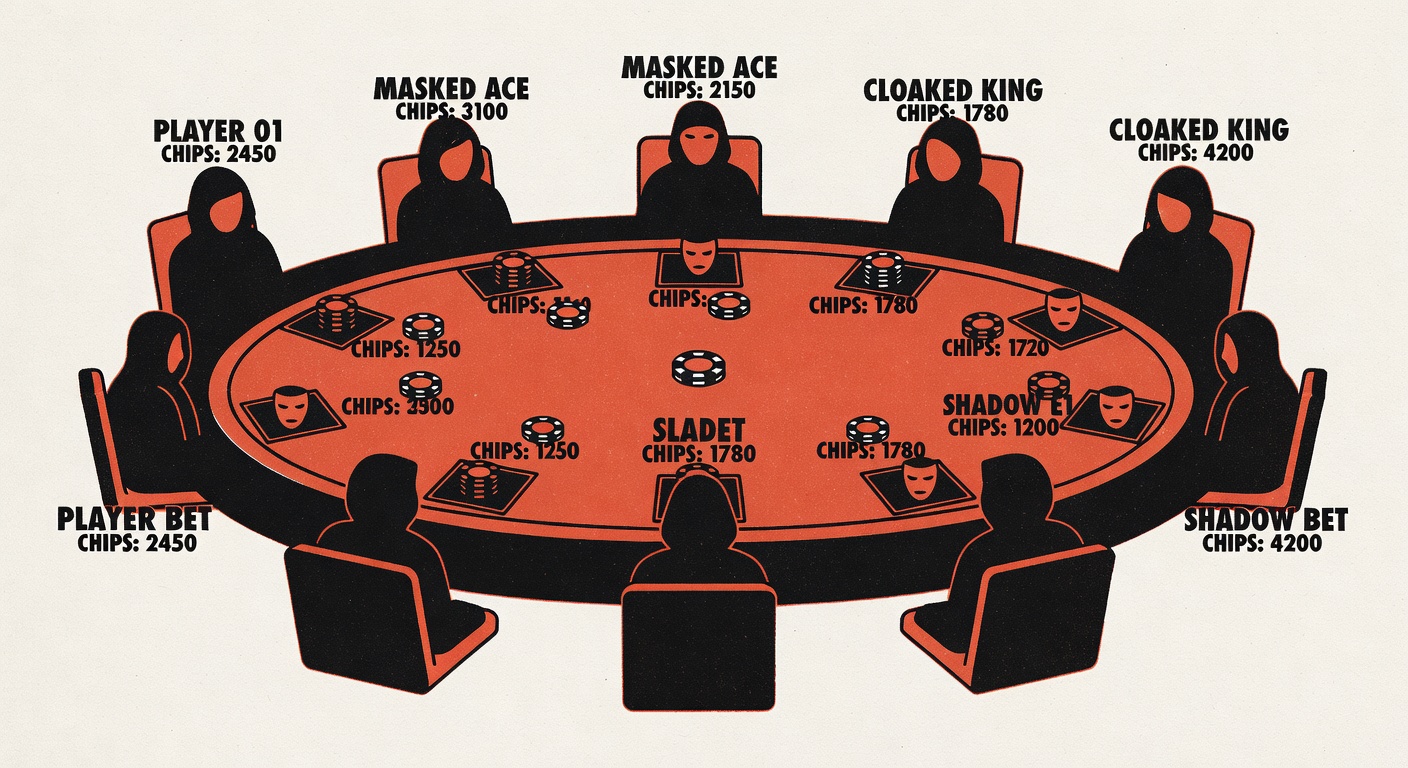
Anonymous poker tables are where you sit down and no one knows your name.
Your seat number is your identity. Player 4. Player 7. No names. No tells. No history.
The theory is good. The practice is different.
The Theory
Anonymous tables level the playing field. A skilled player can't use table image. Can't use reputation. Can't use how many times you've seen them play.
Everyone starts fresh. Every hand, you're nameless.
This is theoretically perfect. You play the game, not the people.
But games are about people. That's the flaw in the theory.
The Practice
Anonymous tables have their own tells. They just work differently.
A player who always folds to aggression is still visible as player 3 who always folds to aggression.
A player who bluffs constantly still appears as player 6 who bluffs constantly.
The anonymity doesn't eliminate player type. It just makes it harder to track.
The Game Quality
Anonymous tables attract a specific type of player: people who don't want to be seen playing poker.
This includes:
- Professional players hiding their face from family or employers.
- Players with gambling problems trying to hide it.
- Players trying to hide their strategy from competitors.
- Casual players who just like privacy.
But it also includes players trying to hide their bad play. Players who know they're terrible and don't want anyone to know.
So anonymous tables are populated with players who have reasons to hide. Not all of those reasons are good for game quality.
The Rake Impact
Anonymous tables usually charge more rake (the casino's cut of the pot).
Why? Because the casino's not making money off table image benefits. A skilled regular who's built an image can extrapolate value from that image. Anonymous tables eliminate that, so casinos take more rake to compensate.
This means the games are softer (easier to beat). But also the rake is harder (costs more to beat).
Who Wins
Here's who wins at anonymous tables: skilled players who are good at quick pattern recognition.
You sit down. Player 2 raises. Player 5 folds. Player 8 calls. After 20 hands you notice player 8 calls everything. You adjust.
This is pattern recognition without history. It's harder than using history, but skilled players still manage.
The Loneliness Factor
One thing anonymous tables lose: the social element. You're not building friendships. You're not building a reputation. You're just grinding against random players every session.
This is isolating. Some people like it. Most people don't.
Over time, this changes who keeps playing. The people who stick around are the hardcore grinders who don't need the social element.
This makes the games tougher. And the games being tougher makes the games less fun for casual players.
So anonymous tables get progressively more serious and less friendly.
The Verdict
Are anonymous tables worth playing?
If you're a strong player and you don't care about social elements: yes.
If you're an average player and you like the social element: no.
If you're someone hiding from someone: maybe, but that's a personal question, not a poker question.
The anonymity doesn't make the game better. It just makes the game different. And different games suit different players.