
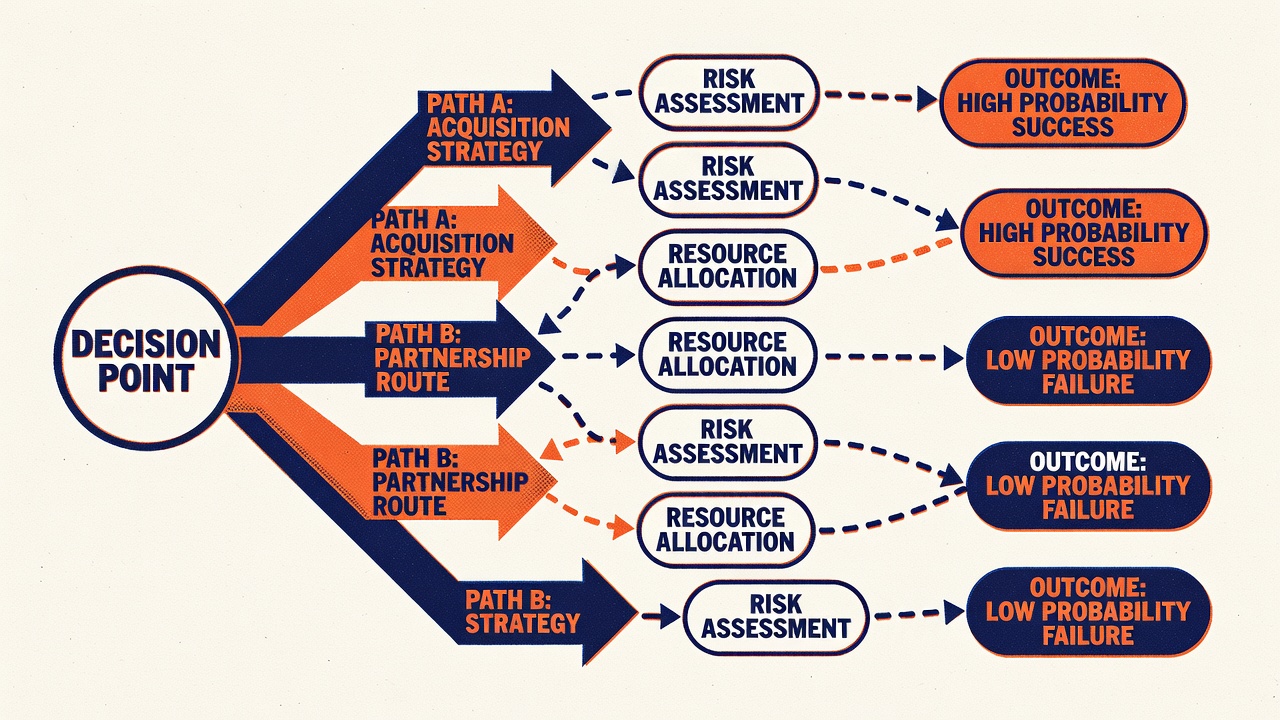
Alright so here's the thing about blackjack surrender: most casinos don't even offer it, which is wild. The ones that do split it into two versions that sound identical but mathematically flip the entire decision tree. This is actually a perfect case study in how game rules encode house advantage the way smart contracts encode rent extraction. One ruleset gives you a real strategic choice. The other is basically a scam with better optics.
Let's set up the mechanical difference first. Early surrender (ES) means you can surrender your hand before the dealer checks for blackjack. Late surrender (LS) means you can only surrender after the dealer has already peeked and confirmed they're not holding 21. Sounds cosmetic. It is not.
In early surrender, you're making a decision with less information. The dealer's hole card is still unknown. You need to calculate: what's the probability this hand busts if I stand? What's the probability the dealer busts if I hit? Then overlay the fact that you can walk away from 50 percent of your original bet. The advantage shifts heavily toward the player in ES because you're surrendering before the dealer has revealed information that would swing the decision.
Late surrender removes that advantage almost entirely. By the time you choose to surrender, you already know whether the dealer has 17, 18, 19, 20, or 21. You're essentially saying "I can see the dealer is going to beat me." Well, yeah. In that scenario, surrendering is mathematically correct, but only in hands where the dealer's up-card and your cards create a no-win position. The dealer has already pruned the decision tree.
Here's the real difference in house edge. With early surrender, a basic strategy player can reduce house edge from 0.6 percent to roughly 0.24 percent on games using one deck, depending on the specific rule set. With late surrender, that 0.6 percent only drops to about 0.52 percent. The difference is 0.28 percent vs 0.08 percent. On a 100-hour weekend at $50 per hand, you're looking at $1,400 in saved edge with ES versus $400 with LS. The casinos know this. That's why you almost never see early surrender outside Atlantic City and a few European sites.
Which Games Offer Which
Attlantic City casinos still deal early surrender in most of their high-limit rooms because it's been grandfathered into gaming law there since the 1980s. Las Vegas went full late surrender around the time the city realized it could shrink the advantage back down without removing the feature entirely. Online platforms (Pragmatic Play, Evolution Gaming, BetSoft) mostly implement late surrender because it's the legal minimum in jurisdictions like Malta (MGA) and Curacao. If you're playing Evolution's live blackjack, you get LS. If you somehow find a Playtech legacy game with surrender at all, it's probably LS.
The choice matters most in specific hands. You're thinking about surrendering when you're holding 15 or 16 and the dealer shows 9, 10, or Ace. Or you hold 14 and dealer shows 10. These are mathematically ugly positions. With early surrender, you actually have a real question: is surrendering better than hitting and hoping? With late surrender, the math has already resolved in the dealer's favor most of the time, so you're just cutting your losses.
Early surrender wins you the option to exit before the dealer reveals their hidden card. Late surrender wins the casino the option to strip away that informational advantage.
Why This Matters for Strategy
If you ever sit down at a table that advertises "surrender available," your first question should be: which kind? Because basic strategy for ES and LS are actually different. In early surrender blackjack, you surrender 15 vs A and 16 vs A because you know the dealer has a 31 percent chance of hitting blackjack. Giving up 50 cents on the dollar beats a 31 percent chance of instant loss. In late surrender, you can't surrender 15 vs A anymore because the dealer already checked and confirmed they don't have 21. The decision tree collapsed.
Cardroom software tracks this distinction in the RNG seed and payout schedules. Your expected loss per hand in ES is measurably lower. The game is literally more fair. This is the opposite of what happens with most casino rule variations, where house advantage only moves in one direction: toward the house.
That's the whole asymmetry. When rules are ambiguous or non-standard, the house has already done the math and picked the ruleset that extracts the most rent. You get to choose between worse and terrible. Early surrender is the rare moment where the player's option set actually expands. Seek it out.


