Kerry Packer: The Australian Billionaire Who Terrified Vegas
There is a version of the Kerry Packer story you may have heard. The Australian media tycoon arrived at a Strip casino, bet a million dollars on a single hand, won or lost a fortune in an afternoon, and left the pit boss in a state of mild heart failure. The story is true in outline. What is less discussed is that the casinos, for all their public hand-wringing, generally welcomed Packer back. The fear was rationed. Let me explain.
Packer died in 2005. At the time of his death, his net worth was somewhere around 5 billion Australian dollars, making him one of Australia's wealthiest men and, in the small subculture of casino whales, a globally known figure. Channel Nine, Consolidated Press Holdings, the whole media empire, was his. His gambling was, by every honest account, a sideline. But the sideline was memorable enough that people still tell stories about it twenty years later.
Here is my thesis: Packer did not terrify Vegas, exactly. He presented a specific optimization problem that Vegas was not set up to solve elegantly.
The comp math
The standard Vegas model for high-limit players is built on a concept called theo. Theoretical loss. A casino calculates what a given player should lose, over time, based on their average bet size, hours played, game speed, and the house edge of the chosen game. The theo figure is the basis for comps: rooms, meals, airfare, whatever. A player who generates 100,000 dollars of theo in a year is likely to receive somewhere between 15,000 and 30,000 in comps, depending on the house's generosity.
This model works beautifully for 95 percent of high-limit traffic. It breaks for Packer. The reason is that Packer bet large enough, and lost (or won) inconsistently enough, that his theo was not a useful predictor of his actual behavior in a given visit.
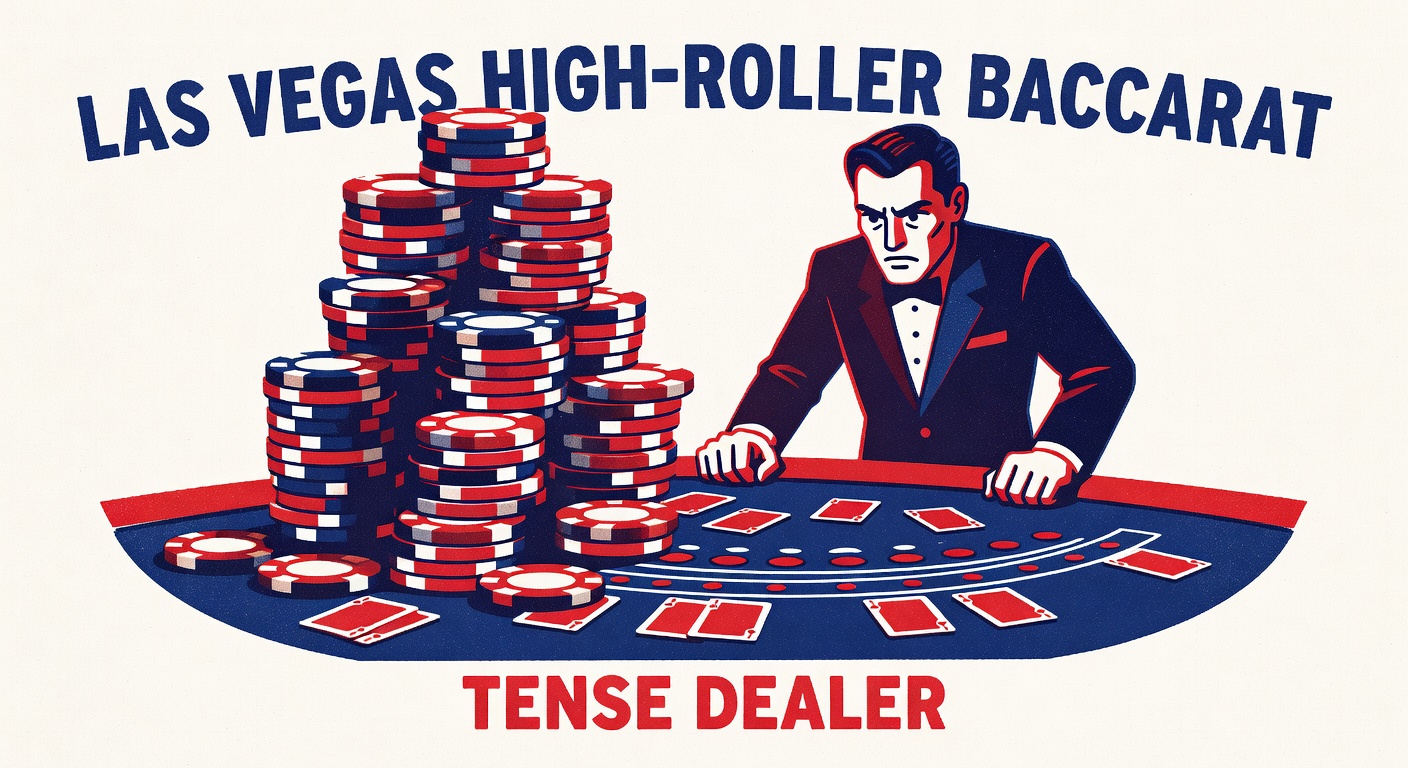
Consider baccarat, his game of choice. Baccarat has a house edge of around 1.06 percent on the banker bet. If a player bets 250,000 per hand and plays 70 hands an hour for 10 hours, the casino's theo on that session is about 1.85 million. The player's actual variance around that figure is enormous. Any one session might end with the player up 8 million or down 8 million. Over a long enough horizon, the casino wins roughly 1 percent. Over three days, anything can happen.
Packer was betting at levels where the variance could move a casino's quarterly earnings in either direction. One 10-million-dollar session could make a pit's month, or erase it. This is not a thrilling position for a publicly traded casino company. Shareholders prefer predictable revenue.
Which is why the fear was rationed. A Packer visit was a high-variance revenue event. It was not, in expectation, a bad event; the casino was favored each hand. But the variance was large enough that finance people worried, and finance people run casinos now.
The famous anecdotes, briefly
The stories are mostly true. A partial list.
- Packer reportedly won 20 million from the MGM Grand in two sessions across a week in 1995. Reliable sources include MGM's own public filings for that quarter, which showed a notably weaker baccarat hold.
- He gave a waitress a 120,000 dollar tip at the Stratosphere after a winning session. The waitress, by some accounts, put a deposit on a house the next week.
- He famously told a Texan at a table who said he was worth 100 million, "I'll toss you for it," and the Texan declined. This is attributed, by various accounts, to a London table rather than Vegas, but the sentiment survived the continental transit.
- Steve Wynn personally intervened on at least one occasion when a pit boss tried to enforce a standard credit limit on Packer, because Wynn understood that if Packer flew home in a huff, he flew to a competitor, and the long-term value of the relationship exceeded the short-term risk of any single evening.
These anecdotes are fun. They obscure the underlying math.
The contrarian case
Here is the case I want to make, with one caveat at the end.
Packer's casinos-terrified-by-the-whale narrative is mostly marketing folklore. The casinos did not lose money on Packer in aggregate. They lost money on him in specific sessions. Over the 30 years he played them, the house edge on baccarat ran roughly as predicted, and the total house net from his play (adjusting for comps he received and losses they absorbed) was positive.
What the casinos did lose was composure. Not money. When a man at a baccarat table is betting 250,000 a hand, pit bosses sweat. Not because the house is losing in aggregate, but because the house is losing in their shift, and shift bosses are evaluated on shift performance. A bad shift is career-damaging even if the quarter is fine.
So the real story is a principal-agent problem. The casino's long-term interests said, welcome Mr. Packer, extend credit, run him comps. The local manager's interests said, please not on my shift. This tension produced the famous stories about casinos "terrified" of Packer. The people writing the stories were interviewing the local managers, not the corporate finance teams.
The caveat: Packer's willingness to walk was real, and it did give him genuine bargaining power. A casino that lost him to a rival suffered a visible, measurable revenue hit. This made the larger operators solicitous, which in turn made Packer's terms increasingly favorable. By the late 1990s he was playing on credit lines that no ordinary high-limit customer would have been extended, and receiving comps that bordered on cash rebates. In a sense, he did terrify Vegas, but what he terrified it into was discounting, not into turning him away.
What this teaches the ordinary player
Four observations for the average reader, who will never bet 250,000 a hand.
First, the comp structure at any casino is based on theoretical loss, not actual loss. A player who wins one session receives comps based on what they were expected to lose, not what they actually lost. This means a winning player can, counterintuitively, receive good comps. Most people assume they must lose to earn comps. The math is more forgiving than that.
Second, variance in high-limit play is enormous, and the public stories always sample the tails. For every Packer session that made the papers, there were 50 whale sessions that produced unremarkable outcomes. The media's selection bias makes high-limit gambling look more dramatic than it is.
Third, the relationship economics matter. Packer's bargaining power came from his willingness to leave. A player who can credibly commit to taking their action elsewhere gets better terms than a player who cannot. This is true at the whale level and, in a muted way, at every level down to the 25-dollar blackjack table.
Fourth, nobody beats baccarat over the long run. Not Packer, not Ivey (who tried a different method, famously, and ended up in court). The house edge is small but it is inexorable. Packer did not beat baccarat; he bet enough at one time that, within the rounding error of variance, anything could happen on any given night.
Packer died in December 2005. He was 68. His son James briefly took over the family business interests and has had a more ambivalent relationship with casinos than his father; he has owned them rather than played them, though he has also lost money at their tables. The inheritance, in that respect, traveled.
The picture that survives is of a man who walked into Caesars Palace with his own security detail and his own rules and played baccarat until one of them ran out. The rules, usually, lasted longer than the night.