The Machine Under the Hood
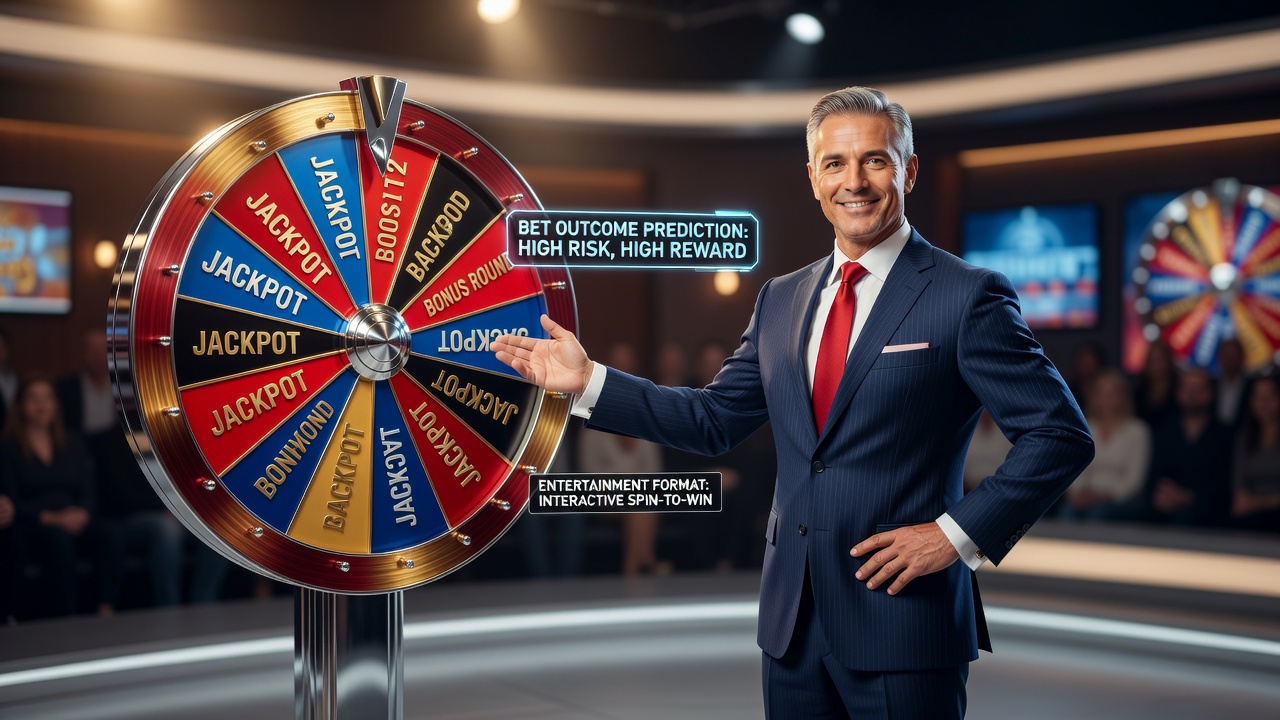
Dream Catcher, Monopoly Live, and Crazy Time are presented as live dealer games. You see a studio with a presenter and a physical wheel or game board. You place bets through an online interface, and the presenter spins/plays the game. The outcome determines your payout.
But mechanically, they're RNG games. The presenter spins the wheel. The wheel's outcome is predetermined by an algorithm that runs before the spin. The spin is just animation. Same architecture as a video slot: an RNG generates a number (1 to 54), the algorithm says "number 23 wins 20x," and then the wheel is spun in a way that lands on number 23.
I've worked on slots for forty years. I know the difference between a mechanical outcome and an animated outcome. A mechanical wheel slot (the kind with a physical wheel inside the machine) generates a mechanical result: the wheel stops where it stops. The odds are determined by the wheel's physics and calibration.
Dream Catcher's wheel is digital. The outcome is determined by software. The spin is for show.
The Regulatory Gray Zone
Regulators classify games as "table games" or "slots" based on mechanics. A table game has a live dealer making decisions. Baccarat is a table game because the dealer deals cards according to fixed rules. Blackjack is a table game because the player makes decisions (hit/stand) that affect the outcome.
Dream Catcher has neither. The presenter has no agency. The player has no agency. The outcome is predetermined and animated.
So is it a slot? By functionality, yes. By presentation, no. The UKGC and MGA have not issued clear guidance, so operators are in a gray zone. They market it as a table game (because that sounds more legitimate) but operate it as a slot (because the software is simpler and cheaper).
The House Edge Question
Slots have fixed RTPs (Return to Player). A machine is calibrated to 96% RTP. Variation comes from randomness over large sample sizes, but the long-term outcome is mathematically determined.
Table games, in theory, have variable edges based on player skill. Blackjack basic strategy players face 0.5% edge. Weak players face 3-5% edge. The game's edge depends on play quality.
Dream Catcher cannot work that way. There is no skill in guessing where the wheel will land. So the edge is fixed: the RNG is programmed to pay out 95-98% of wagered money over millions of spins. This is identical to a slot.
But because it's presented as a table game, players might believe the edge is different. They might think: "Table games are fairer." This is a perception advantage for the operator.
Why Operators Love Them
Game show crossovers are cheaper to operate than traditional live tables. Evolution hires one presenter, runs multiple games simultaneously (Monopoly Live serves 1,000+ concurrent players using one physical board and multiple camera angles), and scales to massive throughput.
A traditional live roulette table requires one croupier, seats 6-8 players, and generates revenue from those players' bets. A Dream Catcher game has one presenter, seats 1,000+ players, and generates revenue from all of them. The presenter labor is amortized across vastly more players.
Are They Really Table Games?
No. They are slots with live presentation. The fact that a human is visible on camera doesn't change the mechanical nature. The outcome is predetermined, the player has no agency, and the edge is fixed.
Some regulators (Netherlands, Germany) have started reclassifying these games as slots, which means higher taxes and different regulations. This is correct. The presentation is theater. The mechanics are clear.