In a Macau junket room, we understood that a player's comfort was the game. Temperature, humidity, light, the pace of dealing, the quality of the dealer's silence. Everything was calibrated to keep the player in session.
Mobile casino play has a new friction point: battery. A player's phone dies mid-session, they leave. The session ends. The player experiences frustration. For a casino trying to maximize time-on-screen, a dead battery is an outage.
Why Mobile Casino Is Battery Intensive
A live dealer game streams video (camera feed from the dealer), audio (the dealer's voice and table noise), and maintains a constant connection to the game server. The video is typically 720p or 1080p. The bitrate is 2 to 5 megabits per second. The audio is 128 to 256 kilobits per second.
Maintaining that stream, in real-time, requires the phone's CPU to decode the video. The GPU (graphics processor) to render it. The modem to maintain the connection. The display to stay on at full brightness (table lighting is bright, or players use max brightness for visibility).
Compare this to a slot game (video only, no stream, no connection demands) or a static game like roulette (image-based, not video-based). A live dealer game is functionally a video call. Video calls drain battery in minutes.
The Cascading Problem
A phone playing a live dealer game at full screen brightness, with video streaming, with WiFi or 4G actively transmitting, loses roughly 15 to 25 percent battery per hour. A three-hour session consumes 45 to 75 percent of a full charge.
For a player who started with 50 percent battery (started their session mid-afternoon), a three-hour game ends with a dead phone.
Casinos and players both notice this. Casinos because it reduces session length. Players because a dead phone is a frustration point.
Technical Solutions
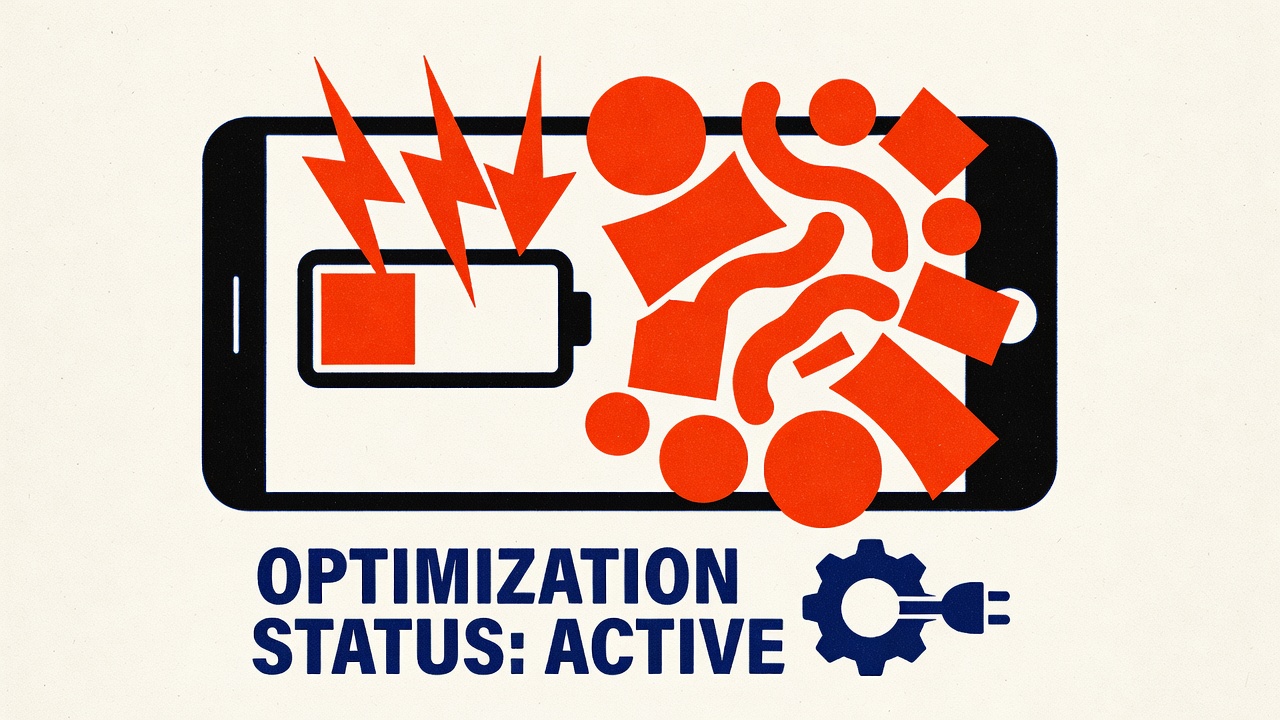
Some platforms have implemented battery optimization. They reduce the video bitrate (720p instead of 1080p) automatically when battery drops below 20 percent. They reduce frame rate (30 fps instead of 60 fps). They switch to audio-only mode (you see a static image, just hear the dealer).
These work. A 720p stream at 30 fps uses about half the battery of 1080p at 60 fps.
Practical Solutions
First: brightness management. Most phones let you set maximum brightness when plugged in, and lower brightness on battery. If you set the max-brightness cap at 70 percent instead of 100, battery drain drops 20 percent. The dealer is still visible.
Second: disable background apps. A phone with Spotify running, notifications enabled, location services active is burning battery constantly. Close everything. Live dealer, WiFi, nothing else.
Third: use WiFi instead of cellular. 4G is more power-intensive than WiFi. If both are available, WiFi consumes roughly 30 percent less battery per hour.
Fourth: airplane mode for non-essential systems. Disable Bluetooth, disable cellular (if using WiFi), disable location. This isn't always necessary but reduces drain significantly for long sessions.
Fifth: keep the phone cool. A warm phone consumes more power. If you're in a hot environment (or the phone is overheating from streaming), a cooling break (minutes of idle time, or even putting the phone near a cool surface) reduces power consumption.
The Honest Assessment
Live dealer games are battery-intensive. A three-hour session will significantly drain a modern phone (20 to 40 percent loss). Practical mitigation helps but doesn't eliminate the problem.
For a serious player, the solution is obvious: plug in while playing. For a casual player, the solution is acceptance: if you're playing on battery, plan for a shorter session, or have a charger nearby.
Casinos could (and some do) optimize further: server-side video compression, dynamic resolution adjustment, even lower-bitrate audio. But there's a floor. A video stream has physical bandwidth requirements. You cannot compress infinitely without losing quality. The battery drain is partly a technical property of the format, not entirely a design choice.