A freeroll tournament is a poker game with zero buy-in and a small prize pool. DraftKings, PokerStars, and other sites run them constantly. They're free. So of course there's a catch.
The Structure
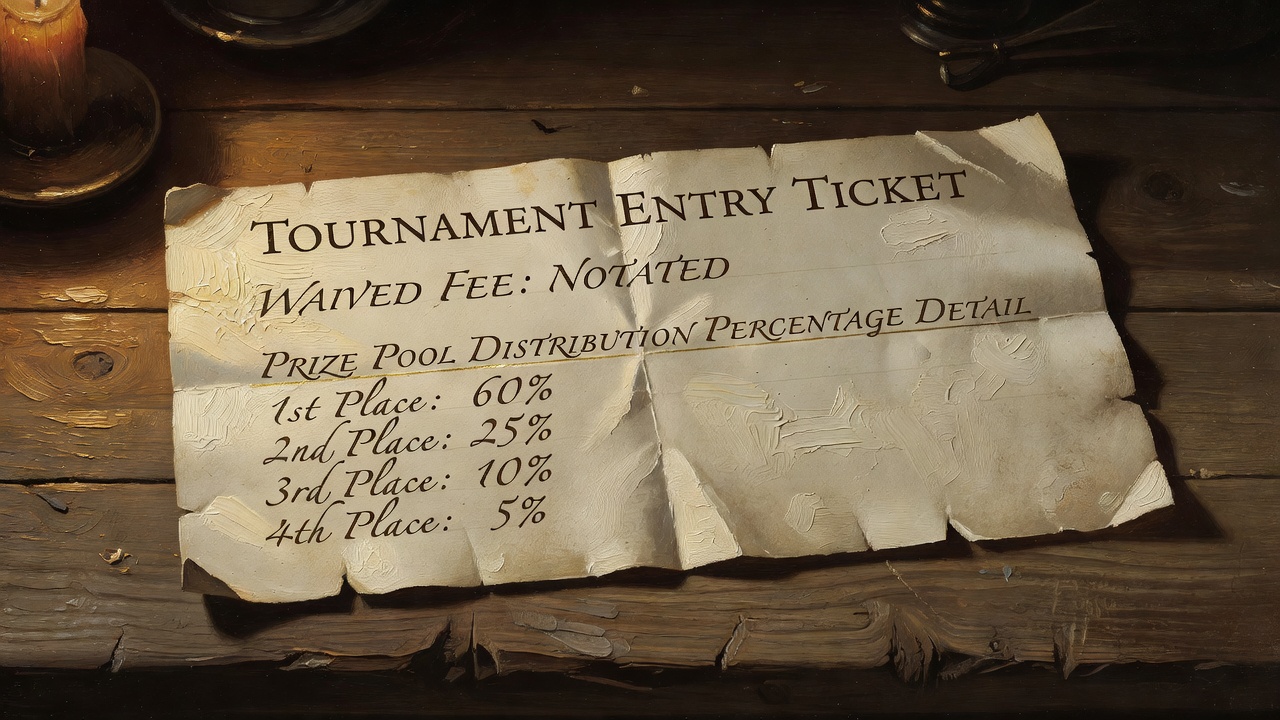
A typical freeroll: 1,000 players, single-table games, winner gets 10 USD cash, second place gets 5 USD. Total pool: maybe 15 USD paid out (or less, with some money left over). Entry fee: zero. The site absorbs the cost and uses the tournament to drive engagement.
You start with a small stack (5,000 chips). You play 3-5 rounds. If you survive, you make it to later rounds. If you win a late-round table, you win some amount (maybe 1 USD).
Why This Works For the Site
Freerolls drive registration. A new player sees "free tournament, chance to win money," signs up, and participates. PokerStars knows that new players who play freerolls convert to real-money players at a rate of approximately 8-12%. The freeroll is the funnel.
Also, the structure attracts weaker players. A player with no money to risk plays carelessly. They go all-in constantly. They're bad. Good players don't show up for 1 USD prizes because the time-to-value ratio is terrible (3 hours of play for a 1 USD win). So the freeroll field is self-selected for weakness.
If you're a decent player, a freeroll is an exploit. You will win more often than the field expects. The weak players are your edge.
The Equity Problem
But here's the unseen mechanics: the site uses freerolls to monitor player skill. They track your win rate, your aggression, your fold percentage. Better players get invitations to higher-stakes freerolls with bigger prize pools. Weaker players get invited to easy freerolls where they'll lose money eventually.
This is not nefarious. It's just market segmentation. But it means the freeroll is not truly random. The site is sorting players.
The Expected Value
In a typical 1,000-player freeroll, your expected finish is position 500-700 (you will be outdrawn roughly as often as you outdraw others, by definition). Winning 1 USD (for cashing) minus 3 hours of time equals an expected value of roughly 0 USD per hour, or negative if you value your time at anything above 0.33 cents per hour.
Yet thousands of players pour into freerolls daily. Why? Because the price is zero. When something is free, people value it differently than when it costs money. A free tournament feels like you're getting something. A paid tournament feels like you're risking something. Psychologically, the free one attracts more entries.
A Middle Path
Some sites run cheap tournaments (1 USD buy-in, 10 USD guaranteed prize pool) that are only marginally more expensive than freerolls but attract slightly better players and have higher payout variance. If your goal is to win real money with minimal risk, these are slightly better than freerolls.
But if your goal is to play poker for entertainment and maybe win something, freerolls are efficient. You lose nothing if you don't cash. You win something if you do. The math is bad, but the price makes it tolerable.