The Riverboats
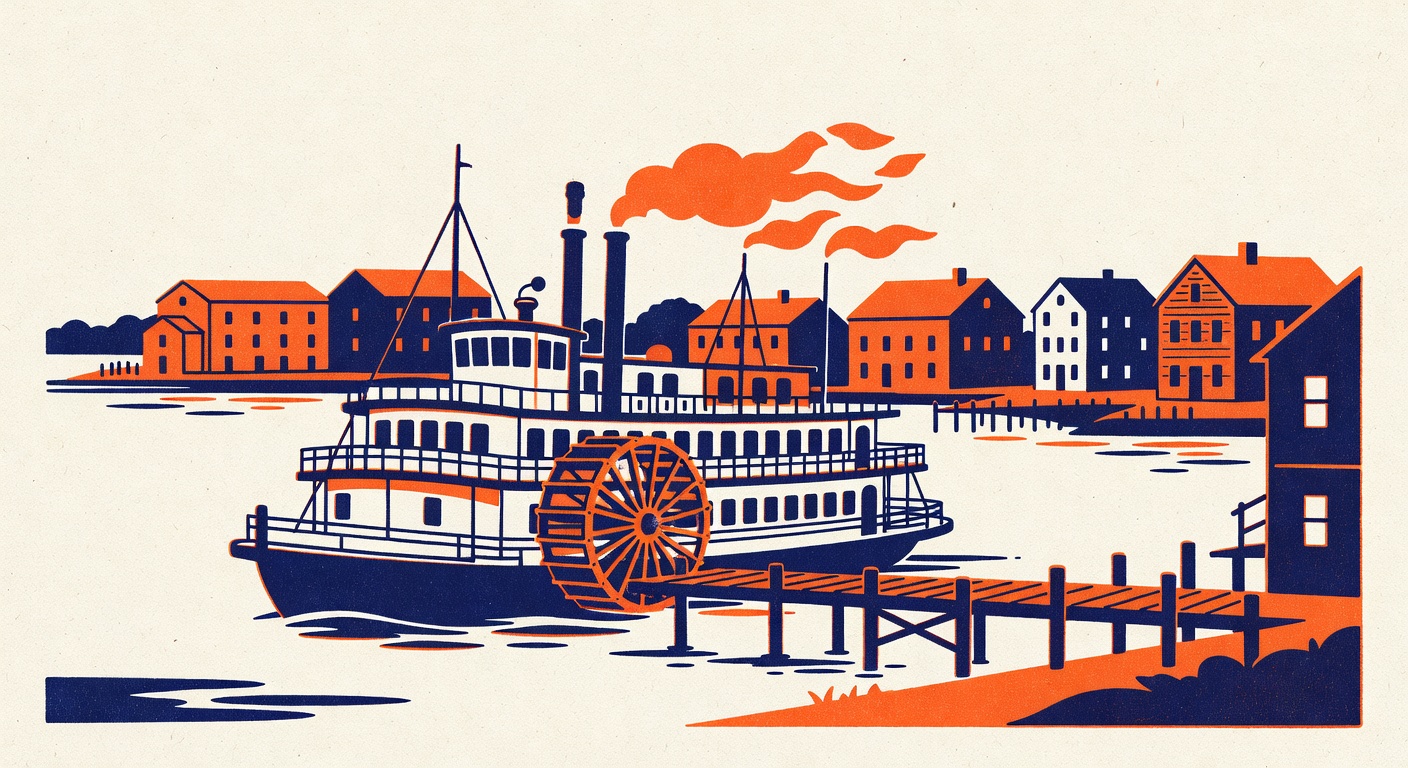
Poker did not start in Nevada. It started on the Mississippi and Ohio Rivers, on boats moving cargo and passengers. The date is somewhere between 1830 and 1860, historians quibble. The place is a riverboat's common cabin, where workers, officers, and passengers played cards to pass time.
The game was a simplified version of the British game Brag, which had betting and bluffing. Brag is played with three cards. Poker evolved on riverboats using a full deck, adding betting rounds and allowing more complexity. The riverboat made it possible because the boat was a lawless space. State law did not apply on the water. Gambling was permitted.
Riverboat captains tolerated gambling because it kept passengers engaged and reduced complaints about the journey (often 20-30 days upstream, moving against the current). A passenger who is gambling is not complaining about conditions.
The Social Structure
Poker on riverboats was segregated by class. Officers played in the captain's cabin with the richest passengers. Workers and soldiers played in the crew areas. The decks themselves were sometimes segregated by race. The game's rules were the same, but the stakes and the company varied dramatically.
What united them: everyone understood that poker was a game of incomplete information. Your opponent's hand was hidden. You had to infer it from their betting. This created a space for bluffing, reading, and psychological warfare. It was not a game of chance (though chance mattered). It was a game of judgment about other people.
The Gunslinger Problem
Historical accounts describe professional poker players on riverboats who made their living through the game. Some were good. Some cheated (dealing from the bottom of the deck, hiding cards in their sleeves, marking cards). Cheating was rampant, and enforcement was impossible. A victim on a riverboat in the middle of the Mississippi had no recourse.
Violence followed. Accounts exist of poker cheaters being stabbed, shot, or thrown overboard. The "Wild West gambler who was fast with a gun" is largely myth (most Old West gunfights were rare and accidental), but the riverboat gambler who fought over cheating accusations is well-documented.
The cheating problem drove poker off riverboats. By the 1870s, as railroad travel displaced riverboats, poker migrated to saloons and later to dedicated casinos, where proprietors had an incentive to enforce fair play.
The Lesson Embedded
Poker's origin teaches that gambling communities create rules to survive. The rule against cheating existed not because of morality but because cheating destroyed the game's function (a generator of entertainment and social connection). The rule was enforced through violence when legal systems failed.
Modern poker rooms have house rules, dealer oversight, and surveillance because these institutions learned that cheating kills the market. The poker room that permits cheating loses all customers. The one that prevents it grows.
Your grandmother might have disapproved of gambling. But if she understood poker's history, she would recognize that poker survived not because it was virtuous but because it self-corrected. Communities that tolerate cheating collapse. Communities that don't, persist.
This is worth remembering when you're sitting at a table and wondering if the game is fair. The game survives because fairness is its foundation. That's the riverboat's gift.