The Mechanism
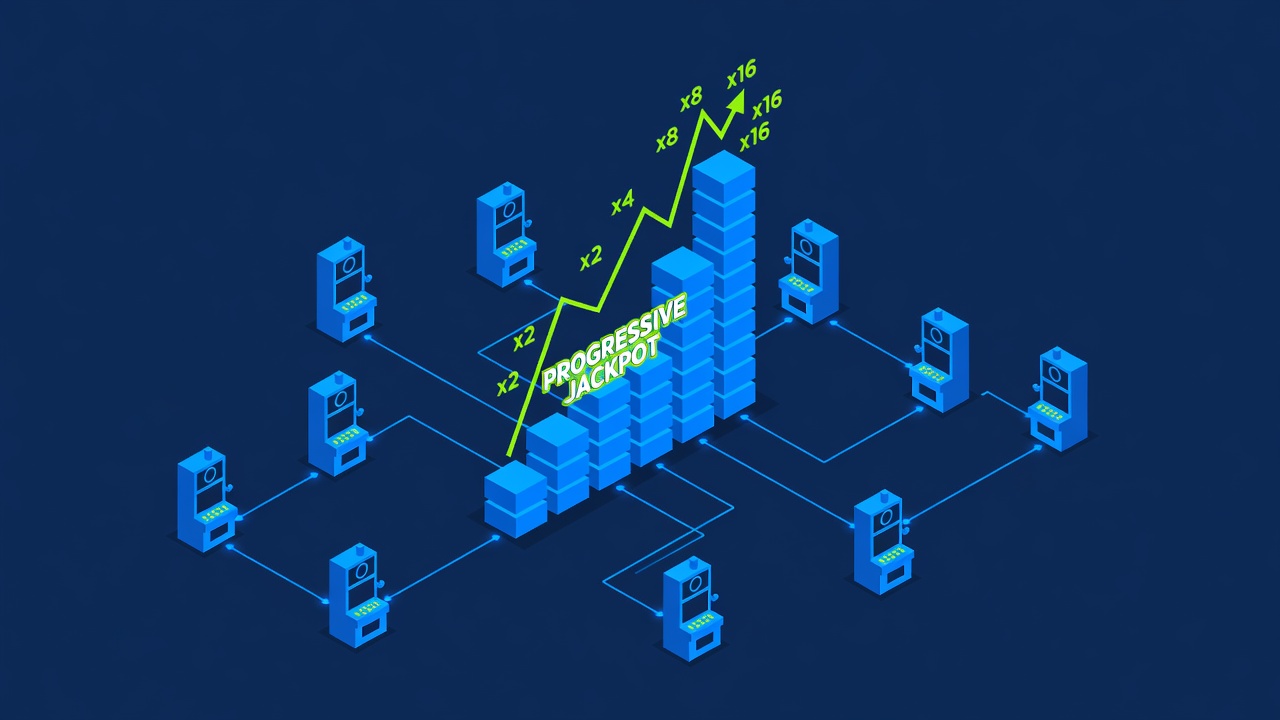
A casino has 100 slot machines. Each one is programmed to contribute 2% of revenue to a shared jackpot pool. Over a week, the machines generate 100,000 USD in revenue. The pool grows by 2,000 USD.
When someone wins the jackpot, the pool resets to a seed amount (usually 1 million or 10 million depending on the game). Then the growth begins again.
Multiple casinos can be linked to the same pool (especially in regulated markets where operators cooperate). A mega progressive like Mega Moolah links machines across 100+ online casinos. The pool grows globally.
The Growth Pattern
A Mega Moolah pool that hits at 18 million USD has accumulated that amount across millions of bets from thousands of players over months. Each player contributed a few cents. Collectively, they created 18 million USD that one lucky player walks away with.
The pool grows exponentially at first (many new players joining the network) then linearly (steady state players). The growth rate reflects how much money is flowing through all connected machines.
The Psychological Design
A progressive jackpot is designed to get larger in ways that seem magical. You see 1 million and think, "No chance." You see 10 million and think, "Maybe." You see 18 million and you play one extra time because the pool is at an all-time high.
This is the reverse of a traditional casino game. In traditional games, the odds are fixed. Higher stakes, higher risk, but the odds do not change. In a progressive, the odds stay fixed, but the emotional impact increases as the pool grows.
The Expected Value
A slot with a 96% RTP and a 2% contribution to a progressive jackpot has an expected value of minus 4% for the base game. But when the progressive pool is at 20 million (instead of 1 million), the expected value might increase to minus 3.5% (the larger jackpot makes the game slightly less negative in expectation).
This creates a mathematical incentive to play when the pool is large. A player with a negative-expectation game can time their play to when the pool is high, reducing the depth of their expected loss.
But here's the trap: as more players learn this, more players play when the pool is high, which means the odds of winning when the pool is high are even lower (because there are more competitors). The expected value advantage of playing at high pool levels is temporary and then evaporates.
Why Players Love It
A progressive jackpot is hope sold as a game. You deposit USD 25. You play 100 spins. You lose it all (probably). But during those 100 spins, you had a chance (however small) to win 18 million USD.
That chance is worth something psychologically. It's worth more than a guarantee of losing USD 25. So people play, knowing the odds are bad, because the prize is so large it seems worth the risk.
The Honest Truth
Progressive jackpots are designed to extract money from players' hope. The system works because hope is powerful enough to overcome reason. Millions of people play a game they know (on average) will lose them money because the possibility of a massive win is psychologically compelling.
This is not fraud. The operators are honest about the odds. But it's an exploitation of human psychology that is effective precisely because humans cannot accurately estimate what 18 million USD means. We just know it's a lot.