How to Read a Horse Racing Form and Past Performances
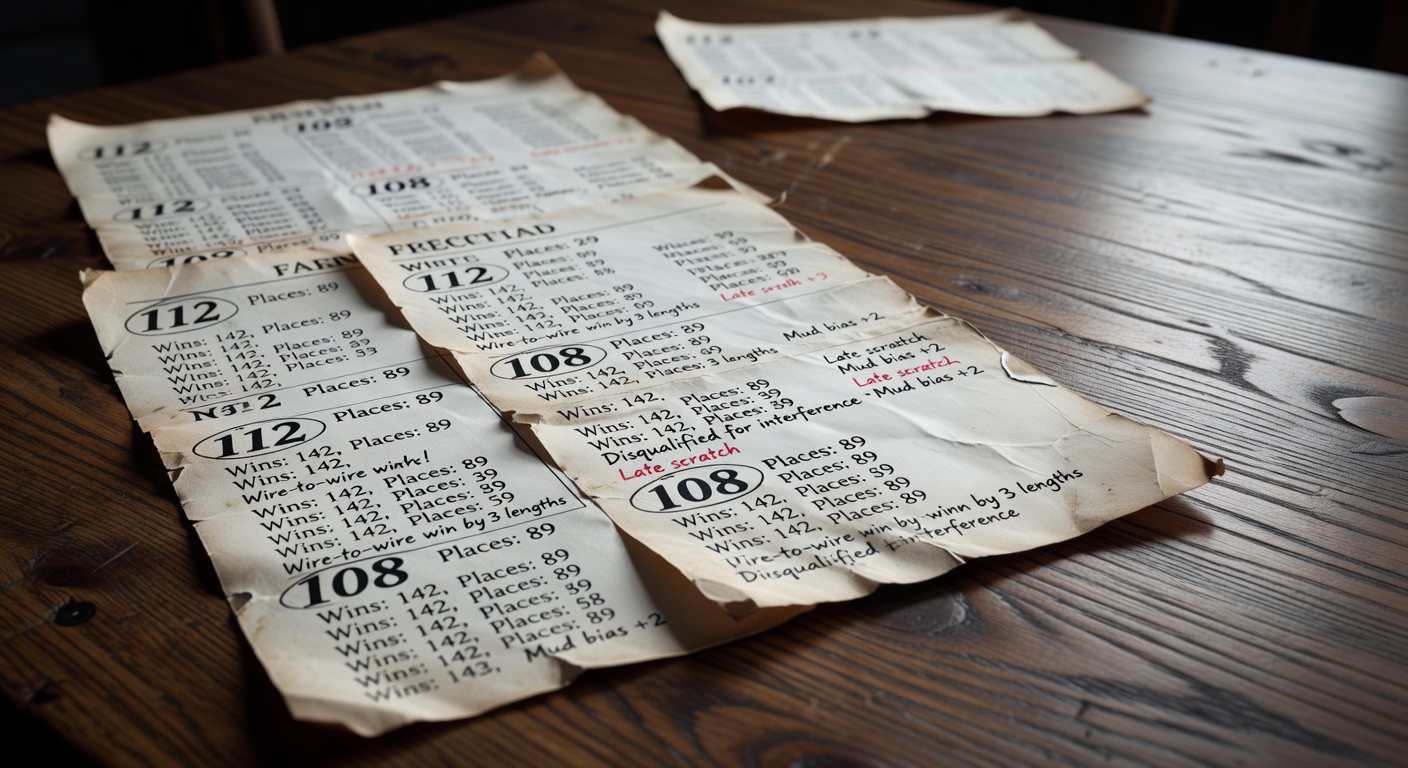
The racing form is a text written in code. You have to know the dialect.
I spent three years sitting in racing rooms from Belmont to Del Mar, watching men and women bend over grease-spotted sheets, marking horses with pencils that had been sharpened so many times they were nubs. The form was their scripture. They didn't just read it. They lived inside it.
The Basic Architecture
The form shows you the horse's racing history. Six to twelve most recent races, depending on what the source is. Each race gets one line. That line contains the date, track, distance, conditions, finish position, payoff, and a hundred other details that might as well be written in Sumerian if you don't know what they mean.
Start with the number. Every horse gets a racing number. That's your anchor point. You'll see it next to the horse's name, age, color, and pedigree. The pedigree matters more than most people think, because it tells you what distance and surface the horse is bred for. A horse out of Northern Dancer might be a sprinter. A horse out of Secretariat bloodlines wants the mile and a quarter.
The racing record-horses run a lot. Some of them run every month. Some of them run twice a year. The form shows the work. If a horse hasn't run in six months, you want to know that. The layoff is information. It can mean the horse was hurt. It can mean the owner couldn't afford training. It can mean the trainer was waiting for the right spot.
Reading Speed and Class
Speed figures are the language serious handicappers speak. They measure how fast a horse ran relative to the track and the field on that day. A figure of 95 at Belmont in June is not the same as a figure of 95 at Aqueduct in December. The track plays differently. The weather was different. The field was different.
You'll see track variants marked sometimes. Good tracks. Muddy tracks. The horse might hate mud. The horse might love it. Watch which tracks the horse's best numbers come from. If every good number happened in fast going and the next race is on a track that's slow, you know the horse is in trouble.
Class is the bloodline of racing economy. There are claiming races where horses go for five thousand dollars. Stakes races where a purse is five million. The horse that dominates in claiming doesn't always step up to stakes. The drop in quality is supposed to be easy. Sometimes it breaks something in them.
The Jockey Matters More Than It Looks
The jockey's name appears on the form line for every race. Most people glance past it. They shouldn't.
Some jockeys have one hand with every horse and that's the hand they play. Some jockeys adapt. Some jockeys are too strong with horses that need finesse. Some jockeys ride a fresh horse and waste them in the first quarter. You want to know who rode this horse before and whether that jockey had a reputation for getting the best out of them.
If a top jockey gets on a horse that's been ridden by a bug boy, you've got information. Either the horse improved and now it's worth paying for a good rider, or the owner is panicking and throwing money at the problem.
At Gulfstream one morning in March, I watched a trainer debate putting his regular jockey on a horse or bringing in someone from out of state. He kept saying the same thing: I trust him. He doesn't burn the horse. That's the conversation nobody sees on the form, but it's written there in the pattern of which jockeys ride which horses.
Track Bias Is Real and Changes Daily
Racing rooms have a term: the track is playing inside. The track is playing outside. The track is playing for speed. What it means is that the track's physical condition is favoring certain running styles and positions.
A wet track favors speed. A slow track favors come-from-behind runners. A track with a worn rail will favor horses that rate well and don't need to be on the rail. This is not folklore. Serious horsemen track this daily. They watch races and note which positions and styles are winning.
When you're reading the form, look at the winner's column. Where did they race? Did they lead or come from back? If the last three winners all led from post position 1 and 2, and the next race has your horse in post 7, you've got information.
The track bias shifts with rain, maintenance, temperature. A track that favored speed yesterday might favor stretch runners today. The guys who make money at this check the weather. They check when the track was last harrowed. They know things most bettors don't bother learning.
The Real Reading: Pattern Recognition Over Time
The form is not a prediction device. It's a record. What matters is what you see when you stack races on top of each other and look for consistency.
Does the horse show up for fast tracks? Does the horse run better fresh or often? Is this horse prone to being stopped by pace? When the horse runs against better competition, what happens? Does it drop off by three lengths or twenty?
I watched a woman named Marie at Churchill Downs who never watched live racing. She studied forms. She had notebooks from 1987. She'd find patterns in how horses performed on certain days of the week, certain times of year, against certain trainers. She made more money than people who spent forty hours a week at the track because she saw things in the text that other people read right over.
The form is a biography of the horse. Read it like you're trying to understand someone. Look for consistency. Look for change. Look for the moment something went wrong. Most horsemen won't tell you they're superstitious but they are. They'll tell you they study the form. What they're really doing is learning to trust their intuition by letting the data confirm what they feel.