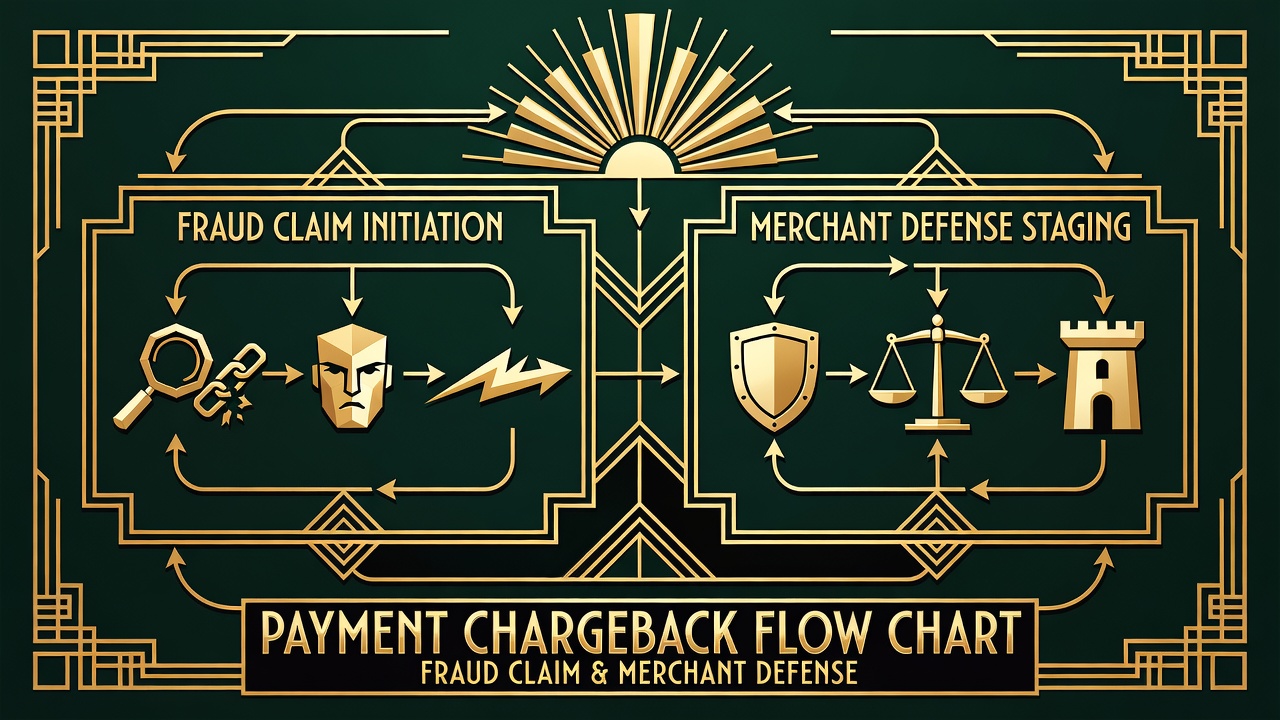
A chargeback is a dispute filed with a credit card company. A player deposits 500 USD at a casino, loses it all, then calls his bank and says: "I did not authorize that transaction." The bank investigates. If they find the charge legitimate, they credit the customer's account anyway (called a provisional credit) and ask the merchant (the casino) to provide evidence that the transaction was authorized.
The casino provides evidence: the player's IP, login history, payment confirmation email, T&Cs acceptance. The bank reviews this. Usually, the casino wins. But here is the gap: the time between the provisional credit (which happens immediately) and the final decision (which takes 30-90 days) can be exploited.
How It Works in Practice
A player deposits 500 USD using a compromised credit card (stolen, not his own). He plays and loses. He files a chargeback claiming he never authorized it. The card issuer credits him 500 USD immediately as a provisional credit. The casino fights the chargeback, presenting evidence. But the player keeps the provisional credit.
Meanwhile, the casino is out 500 USD plus the fee for processing the chargeback (typically 15-25 USD per dispute). If this happens 100 times per day across a casino, that is 5,000 USD in chargeback fees alone, plus 50,000 USD in unrecovered fraud losses.
I worked on a task force that tracked a single network of 400 fraudulent accounts at one major sportsbook. They used stolen cards, each account making a single 500-1,000 USD deposit, playing low-volatility games to avoid detection, then issuing chargebacks after the balance had been wagered. The total fraud was estimated at 180,000 USD. The operator recovered approximately 20,000 USD after disputing the chargebacks.
What Casinos Do
Responsible operators have built significant defenses. They require multi-factor authentication before payout (if the cardholder number does not match the account holder, the payout is blocked). They implement Address Verification Service (AVS) checks. They require a photo ID that matches the card holder name. They flag accounts that play only once and cash out immediately.
Stake and DraftKings are particularly aggressive. They require full KYC (know-your-customer) documents before any deposit over 3,000 USD. Stake requires that the payer of the card is a verified player.
But smaller operators and unregulated operators have minimal defenses. This creates a selection effect: fraudsters migrate toward sites with weak controls. The site's revenue looks good for a few months. Then the chargeback volume reaches 3-5 percent of transactions. The merchant processor (the payment company that handles the transactions) issues a warning. If the rate exceeds 1 percent, the processor can terminate the account entirely.
The Cardholder Angle
Not all chargebacks are fraud. Some are legitimate disputes. A player deposits, plays, loses, then argues he never authorized it or the casino breached its obligations. Some cardholders are simply dishonest. Some are mentally unwell. Some genuinely did not make the transaction.
The bank cannot easily distinguish. So they err toward the cardholder. This is consumer protection. It is also an opening for abuse.
I saw one case where a player made three separate deposits, lost all three, then filed chargebacks on all three. He kept the money via the provisional credits and also kept his account balance (which the casino had not yet seized). The casino had to fight three separate disputes, spending 75 USD in processing fees alone. They won all three, but by then the player was gone and the provisional credits were claimed.
Why the Fight Matters
A casino's chargeback ratio (total chargebacks divided by total transactions) is public information that payment processors track. A ratio above 1.5 percent signals instability. A ratio above 2 percent means the merchant processor will terminate the account. At that point, the operator cannot process credit cards at all. They are reduced to crypto, bank transfers, and e-wallets, which have higher costs.
This is why operators push back on chargebacks so aggressively. It is not just the money. It is the rating that affects their ability to process cards.
Defense for the Player
If you have a legitimate dispute (you were scammed into a misleading promotion, or you meet your local problem gambling protections and want your money back), a chargeback is your tool. The process is free and the bank is on your side.
But if you are simply trying to get free money by depositing and then disputing, you will likely lose. The casino has your login history, your IP, your consent signature on the T&Cs. The documentation is there.
Some jurisdictions (UK, Malta) have dispute mechanisms separate from chargebacks. Use them. They are faster and more specialized.