
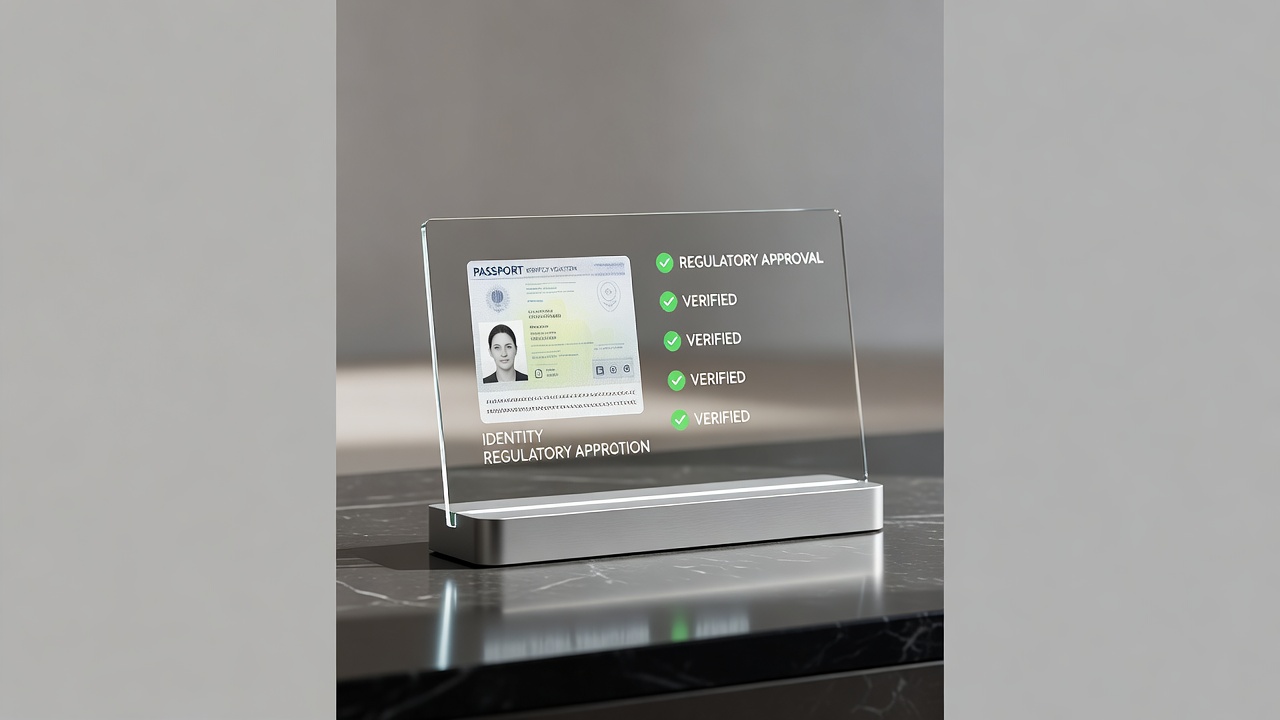
KYC refers to identity verification processes required by regulated casinos. You provide a name, an address, a date of birth, perhaps a government ID. The casino runs this against sanction lists, checking whether you are politically exposed or connected to known criminal ties. It is bureaucracy. Which is to say it is annoying and it works.
Anonymous crypto casinos skip this entirely. You generate a wallet address, send funds, and play. No identity. No records. No relationship between your online persona and your legal name. These two approaches offer different guarantees. A KYC casino guarantees you a record of your transactions that persists independently of whether you trust the casino operator.
If they are hacked, regulators have access to your account. If you dispute a transaction, there is a legal framework. If the casino becomes insolvent, your funds may be recoverable through asset seizure. An anonymous casino guarantees you none of these things. If they are hacked, your funds are gone and there is no registry of your holdings. If you dispute a transaction, you have no legal recourse.
The Economics Of Opacity
Anonymous casinos often offer lower house edges as compensation for their legal opacity. They can afford to because they are not paying for KYC compliance infrastructure. A KYC casino might run blackjack at 0.5 percent edge. An anonymous crypto casino might run it at 0.3 percent. The difference is the cost of being legitimate and regulated.
Regulated casinos operate under auditing. An auditor from the MGA or UKGC reviews their games, their RNG, their payout rates. Anonymous casinos have no such oversight. They could be using a flawed RNG. They could be adjusting payouts without anyone knowing. You have only their claim that the games are fair. There is no independent verification mechanism. You are trusting the operator completely.
Anonymous casinos also do not usually offer responsible gambling tools. A KYC casino can set deposit limits, loss limits, time-out periods. You can contact the casino and request they close your account. An anonymous casino cannot enforce this because they have no verified identity to link limits to. This is bad for problem gamblers and good for the casino's retention metrics.
The tax question creates another distinction. A KYC casino reports payouts above certain thresholds to tax authorities. A W2G form in the United States requires reporting of gambling winnings over six hundred dollars. An anonymous casino has no obligation to report your winnings to anyone. This seems like a feature until you file your taxes and the IRS cross-references your bank deposits against reported income.
Gambling winnings are taxable income regardless of whether the casino reported them. Using an anonymous casino does not make your winnings non-taxable; it makes you a tax evader once you cash out. This is a risk that grows proportional to the size of your winnings.
Choosing The Right Structure
KYC casinos are sensible for most players because most players benefit from the legal framework and the audited games more than they benefit from anonymity. Anonymous casinos exist in a regulatory void where operator insolvency is risk you bear entirely alone. The lower house edge is real but not large enough to compensate for unlimited counterparty risk.
If you are in a jurisdiction where casinos are prohibited and you want to play anyway, an anonymous casino at least cannot be shut down by your government. That is its genuine advantage. For everyone else, the KYC casino is the more rational choice by a considerable margin.