The Circumstance
Jon Heywood was 26 years old, stationed with the British Army in Cyprus. He had a small amount of downtime (leave period, off-duty evening). He was using his mobile phone to play Mega Moolah, a slot machine made by Microgaming.
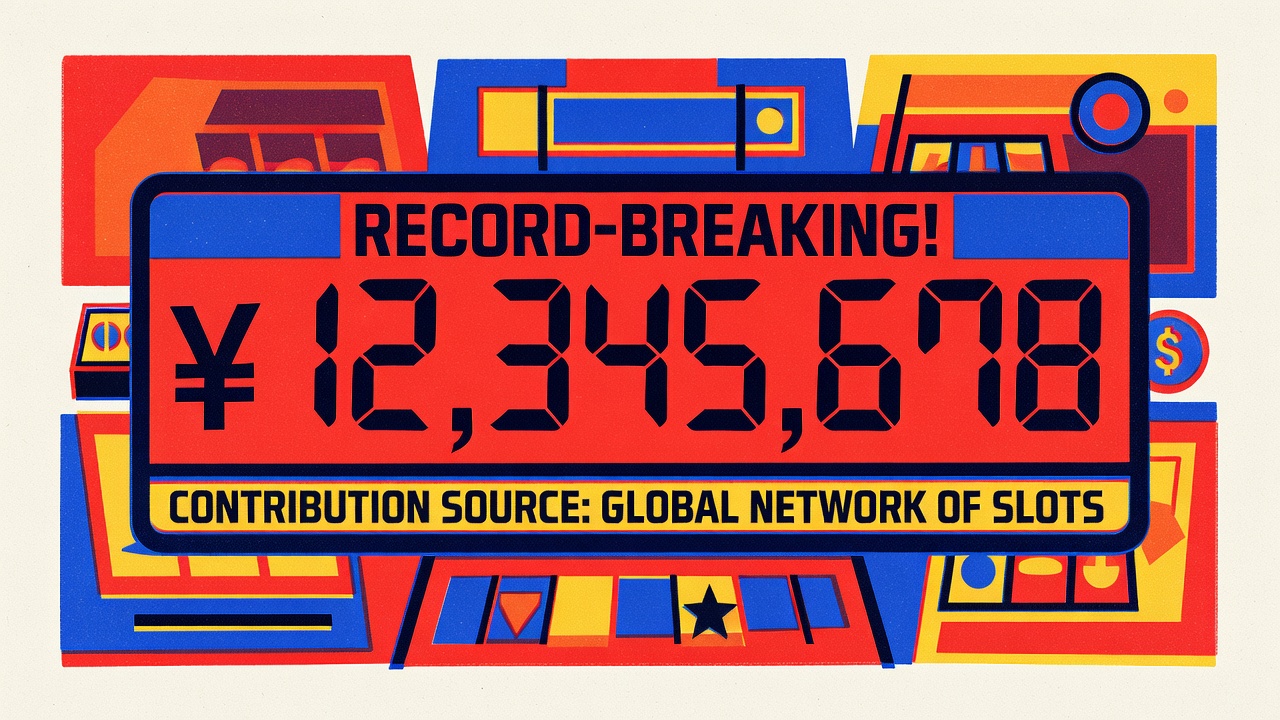
Mega Moolah is a progressive slot. Every bet, regardless of size, feeds a global jackpot pool. The more players, the larger the pool. At the time of Heywood's bet, the pool had accumulated to approximately 18 million pounds.
Heywood wagered 0.25 pounds (roughly 40 cents USD). He hit the Mega Jackpot. His bet returned 17.8 million pounds.
The Mechanism
A progressive jackpot is a random event with a fixed probability. The odds of hitting the Mega Moolah Mega Jackpot are approximately 1 in 49.2 million. Heywood's 0.25 pound bet had the same odds of winning as any other player's bet. But the payout was proportional to the pool size, which had been accumulating.
This is the paradox of progressive jackpots: the probability of hitting the jackpot does not change with bet size (it's the same whether you bet 0.25 or 25 pounds). But the payout size does change (larger pool, larger payout). So a small bettor hitting the jackpot gets a massive return on their small wager.
Heywood's return on investment: 17.8 million divided by 0.25 = 71.2 million to 1. The actual odds were 49.2 million to 1. He was lucky in a way that the math cannot quite explain, except to say that extreme variance happens.
The After
Heywood claimed his winnings. The operator (Betfred) verified the win and paid it out. Heywood invested portions of his winnings (he paid 45% in taxes immediately), gave some to family, and reportedly spent conservatively afterward.
He did not become a compulsive gambler seeking to repeat the win. He understood, by his own account, that the win was chance, not skill, and that the mathematical probability of winning again was impossibly low.
The Lesson
Heywood's win is documentable because it is registered. Microgaming publishes big jackpot winners to build the Mega Moolah brand. But for every Heywood who wins 17.8 million, there are thousands of players who have wagered 0.25 pounds thousands of times and won nothing.
The expected value of a Mega Moolah spin is negative (the house edge is built in). Over millions of spins, a player will lose the expected value amount. Heywood's win does not change that math. It is a rare, improbable event that violates the expected value temporarily.
Progressive jackpots are designed to incentivize continued play. Heywood's publicized win does this. A potential player reads about 17.8 million and thinks, "That could be me." The odds say otherwise. But the story of Heywood is powerful enough to shape behavior.
The Statistics
In the 9 years since Heywood's win, Mega Moolah has been played by millions of players. Multiple other Mega Jackpot wins have occurred, though none as large. The game has grossed billions in revenue for Microgaming and operators. The house edge on all those billions is approximately 2-5%.
Heywood won 17.8 million pounds from a 0.25 pound bet. The millions of other players lost billions collectively. The house, over time, extracts its edge.