The Flamingo: Bugsy Siegel and the Birth of the Vegas Strip
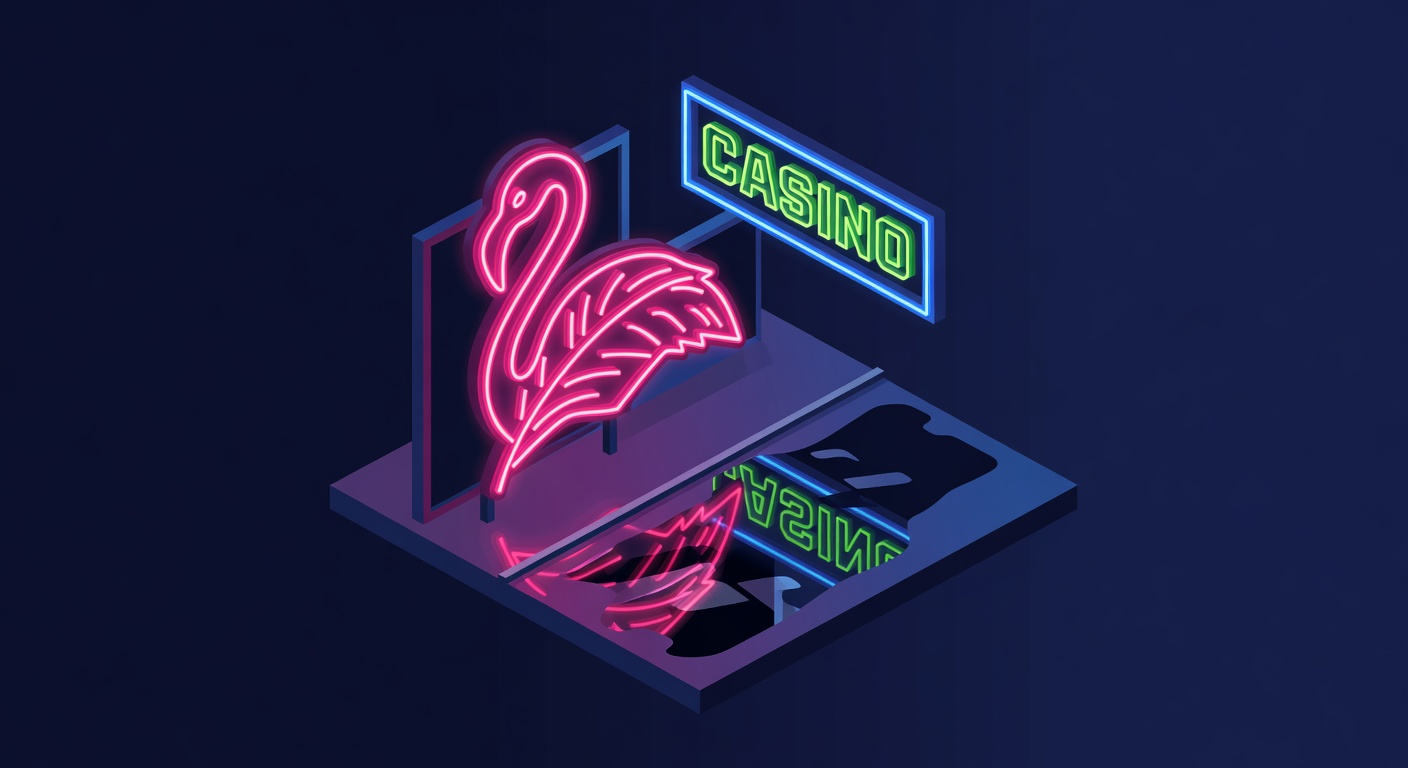
December 26, 1946. Las Vegas, Nevada, just off what will later be called the Strip. A half-built resort on Highway 91. Opening night.
The hotel is not ready. The rooms are not furnished. Only the casino, restaurant, and bar are operational. Seating capacity, about 400.
The man running the place is Benjamin Siegel. Everyone calls him Bugsy, though not to his face. He is 40 years old. He is in a tuxedo. He is also, by several accounts, already several million dollars over budget.
The subject
The Flamingo Hotel. The third casino on what would become the Strip. The first purpose-built resort property. The project that, more than any other, turned Las Vegas from a dusty railroad town into a destination.
Cost at opening: approximately 6 million dollars. Original budget: 1 million. Lead investor: Meyer Lansky, on behalf of the national crime syndicate. Other investors: various Syndicate principals, plus a portion of the money raised from legitimate Hollywood sources including Billy Wilkerson, who had originated the project.
Opening entertainment: Jimmy Durante, Xavier Cugat and his orchestra, Rose Marie. George Raft was there. Lana Turner. Clark Gable. It was a Hollywood premiere crashed into a Nevada gaming license.
The casino lost money that night. It lost money the week after. It lost money through January.
What was at stake
The Syndicate had put up most of the construction funds. They had done so based on Siegel's assurance that a luxury property in the desert would draw Hollywood money and legitimate tourist traffic. Gambling was legal in Nevada since 1931, and the two existing Highway 91 properties (the El Rancho Vegas, opened 1941, and the Last Frontier, opened 1942) had proven that a hotel-casino model on the south edge of town could work.
Siegel's pitch was that those properties were too small, too rustic, and too small-time. The Flamingo would be different. Marble. Air conditioning. A pool with underwater lighting. Hollywood entertainment. A crowd of high rollers willing to make the trip from Los Angeles.
The Syndicate had approved the plan at one million. The project burned through that in the first eight months. Siegel kept coming back for more. Lansky, who had been Siegel's friend since childhood in Brooklyn, covered for him up to a point. Past that point, the national commission was asking questions.
The questions got sharper when it became clear that some of the Flamingo money was unaccounted for. Virginia Hill, Siegel's girlfriend, had been making trips to Zurich. She had a Swiss account. The Syndicate believed (correctly, according to later investigators) that Siegel had been skimming construction funds into her account against the possibility that the project failed.
This is the setup. Now the hand plays out.
What happened
December 26, 1946. The grand opening. Bad weather in Los Angeles. Many of the stars booked for the event never flew in. The casino played to a reduced crowd. The operation ran in the red.
January through March 1947. The Flamingo bleeds money. Siegel closes the casino for two weeks to finish the hotel rooms, on the theory that if guests have somewhere to sleep, they will stay longer and play more. The theory is correct. When the property reopens in March with the hotel tower completed, traffic improves. The casino begins to turn a small profit.
But the Syndicate's patience is gone.
June 20, 1947. Beverly Hills, California. 810 North Linden Drive, Virginia Hill's rented mansion. Siegel is sitting on a sofa in the living room reading the Los Angeles Times. A rifle is fired through the window from approximately ten feet away. Nine rounds. Four strike Siegel. He dies at the scene.
The Los Angeles Police Department investigates. No arrest is ever made. The hitman's identity has been attributed, in various sources, to Frankie Carbo, Eddie Cannizzaro, and Moe Sedway, among others. The FBI has never formally identified the shooter. The job is almost universally believed to have been ordered by Meyer Lansky, though Lansky denied it until his death in 1983.
What it tells us
Twenty minutes after Siegel died, two Syndicate accountants named Moe Sedway and Gus Greenbaum walked into the Flamingo. They told the staff there was new management. The staff did not argue. The casino operated without interruption.
Here is the takeaway. The Flamingo worked. Greenbaum turned it profitable by the end of 1947 and kept it profitable. By 1948 the property was clearing about four million dollars a year, which at the time was enormous money from a single casino operation.
More importantly, the model worked. A luxury hotel-casino on Highway 91 could pull Hollywood money and tourist money in volumes that dwarfed what the older properties had been doing. The Thunderbird opened in 1948. The Desert Inn in 1950. The Sahara in 1952. The Sands in 1952. The Dunes in 1955. The Riviera in 1955. The New Frontier, replacing the old Last Frontier, in 1955. The Tropicana in 1957. The Stardust in 1958.
Each of these was built on the Flamingo template. Large, air conditioned, Hollywood-styled, with the gambling tucked behind a lobby that looked like the Beverly Hills Hotel.
By 1960 the Strip had something like seventeen major properties. The desert two-lane highway that Siegel had built his casino on had become, without a formal plan, a linear entertainment district. The name "the Strip" itself dates from a 1940s Los Angeles police captain who coined it in reference to the Sunset Strip in West Hollywood.
The Flamingo did not invent Las Vegas. It invented the Strip. Those are two different inventions.
The lesson, briefly
The lesson is not that Siegel was a visionary. By most accounts he was an impulsive, violent, egomaniacal man who happened to have good taste in resort architecture and the Syndicate's backing for a project that was bigger than his management capability. He was executed for reasons that had nothing to do with the strategic value of the project, because the strategic value of the project had not yet been demonstrated at the time of his execution.
The lesson is that the Syndicate, which had previously been in the business of running small illegal operations in back rooms of hotels in Miami and New Orleans and the Catskills, identified a legal market in Nevada and moved into it at scale. The Flamingo was the first large-scale deployment of that capital in that market. The model it proved, luxury hotel plus Hollywood entertainment plus gambling floor, became the template for the entire Las Vegas industry for the next forty years.
The men who made money on the Flamingo, after Siegel was gone, were Greenbaum, Sedway, Lansky, and the various hidden partners whose names do not appear in the public record. Greenbaum was himself murdered in 1958 in Phoenix, Arizona, in an unrelated Syndicate dispute. Sedway died of natural causes in 1952.
The Flamingo property itself still operates today, owned by Caesars Entertainment. The original building was demolished in stages through the 1990s. Nothing visible on the current site dates from 1946.
But the Strip dates from 1946. And Bugsy Siegel, who mismanaged the project, skimmed from it, and was murdered six months after its opening, has a statue on the Flamingo property and a name that any visitor to Las Vegas will hear before they leave town.
He did not live to collect the winnings. The hand played out without him.