
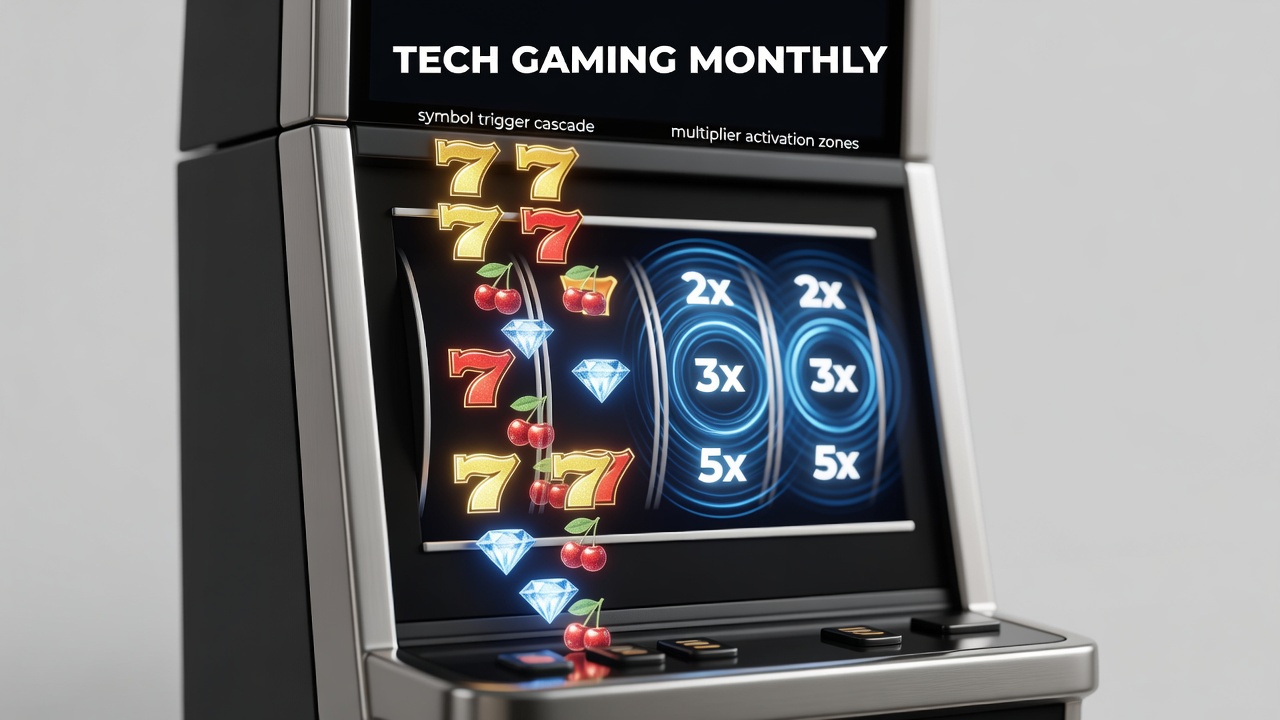
Let me be clear about something first: the PRNG (pseudorandom number generator) doesn't care if a slot is trending on Twitch. The machine doesn't adjust its return-to-player based on viewer count. Every slot I've serviced in thirty years follows the same RTP whether it's getting played by one person in Albuquerque or ten thousand on YouTube. The numbers are in silicon. They don't change based on vibes.
But slot popularity, virality, which games get played and which ones collect dust, that's not determined by the RNG. That's determined by the mechanics sitting on top of the RNG.
The Mechanical Foundation
Billy, the most famous slot in the 1980s arcade scene, was a four-reel machine with a simple innovation: it had a bonus mode where the fifth reel would spin independently if you hit a specific condition on the first four. This meant that a player could see a nearly-winning combination freeze in place while the game offered them one more chance. The anticipation was mechanical. The machine built it in.
Modern streamable slots (let's say a Pragmatic Play or Stake title) build this same principle at a deeper level. Take a game like Sweet Bonanza. The core mechanic is simple: five reels, cascading symbols (winning symbols disappear, new ones fall from the top). But here's the designed-in tension: the game offers an option to buy a bonus directly. Pay 100x your bet to trigger the free spins feature immediately.
Why would anyone do this? Because the free spins are where the big money happens. The RTP is weighted so that bonus rounds account for the bulk of potential payouts. A player can either wait for the bonus to trigger naturally (which might take fifty spins) or pay to enter it immediately.
Streamers instantly saw this. A streamer with a bankroll can buy into the bonus repeatedly. Each buy is a moment of tension: will this spin hit the big multiplier? The audience watches. Chat spams. Someone in the audience has money riding on whether the spin hits. This is the streamer equivalent of a slot mechanic designed to pull attention.
The Aesthetic Layer
Take that mechanical foundation and paint it with a theme. Sweet Bonanza has a candy aesthetic. Bright colors. Clear animations. Symbols are recognizable (peaches, watermelons, grapes). The sound design is satisfying. A cascade win makes a sound like candy dropping. A multiplier reveal has a moment of musical tension. All of this is noise in the technical sense, but it's designed noise. It's there to signal to your brain that something good is happening.
Compare this to a slot with poor aesthetic design: unclear symbol names, animations that don't communicate clearly what just happened, sound design that's either absent or grating. You could have the same RTP. The same payout distribution. The same potential for big wins. But if the player can't easily see that they won, or can't easily understand why the win happened, the game won't be viscerally satisfying. Streamers won't want to play it. Audiences won't want to watch.
The Feedback Loop Problem
A viral slot exists in a feedback loop. Streamer plays it. Chat watches. Chat members want to try it themselves. The casino sees traffic spike. They promote it. More streams happen. The algorithm on Twitch starts recommending streams of the game. More viewers. More players.
But this only works if the game has already solved the mechanical and aesthetic problems. A mediocre slot will not go viral because a streamer played it once. A well-designed slot can go viral because the streamer's experience of playing it is fundamentally different: the game communicates wins clearly, offers moments of anticipation, provides reasonable frequency of moderate wins (not just devastating losses), and does all of this with visual and audio feedback that feels responsive.
I serviced a cabinet called Aristocrat's Lightning Link for years. Simple game. Reels spin. Hit the right combination, you get a feature. The feature involves a circle of symbols, you pick one, it multiplies your win. Mechanically, it's basic. But aesthetically, it was brilliant: the pick feature was interactive (you actually clicked the symbol), the reveal was slow enough to build anticipation but not so slow that it felt like the game was wasting your time. When you won, the win was unambiguous. The animation told a story: "You picked well. Now watch your prize multiply."
That game was everywhere in high-limit rooms because players understood it, liked playing it, and told their friends about it.
The Streamer Dimension
Streamers care about games that produce moments. A slot where you play fifty spins and never approach a feature is boring to watch. A slot where features come relatively frequently, and the features themselves have variable outcomes (small multiplier, big multiplier, you pick correctly, you pick wrong), produces content. The streamer can react. Chat can react. Something is always about to happen.
A game like Gates of Olympus works because the bonus feature isn't a simple multiplier. It includes multiple types of multipliers, stacked wilds, and a re-trigger mechanic (hitting certain symbols extends the feature). The math is solid (RTP is typically 96% or so, standard for the industry). But the feature structure means that any bonus round is a sequence of moments, not a single outcome.
The Brutal Truth
A viral slot is the result of careful mechanical design, solid aesthetic implementation, and a regulatory environment that allows the game to be promoted. But under all of it, the RNG is still just a number generator. No slot is good because it's fair. They're all fair (in the sense that the RNG is genuinely random and the RTP is mathematically verifiable). The games that go viral are viral because they feel good to play. They communicate outcomes clearly. They produce moments of anticipation followed by resolution. They're designed to be watched.


