ICM Explained: How It Changes Tournament Decisions
The Claims Decode
"Instant access to funds." Translation: you can withdraw within 24 hours, but the operator reserves the right to request verification documents that take 48 hours to process, so maybe not.
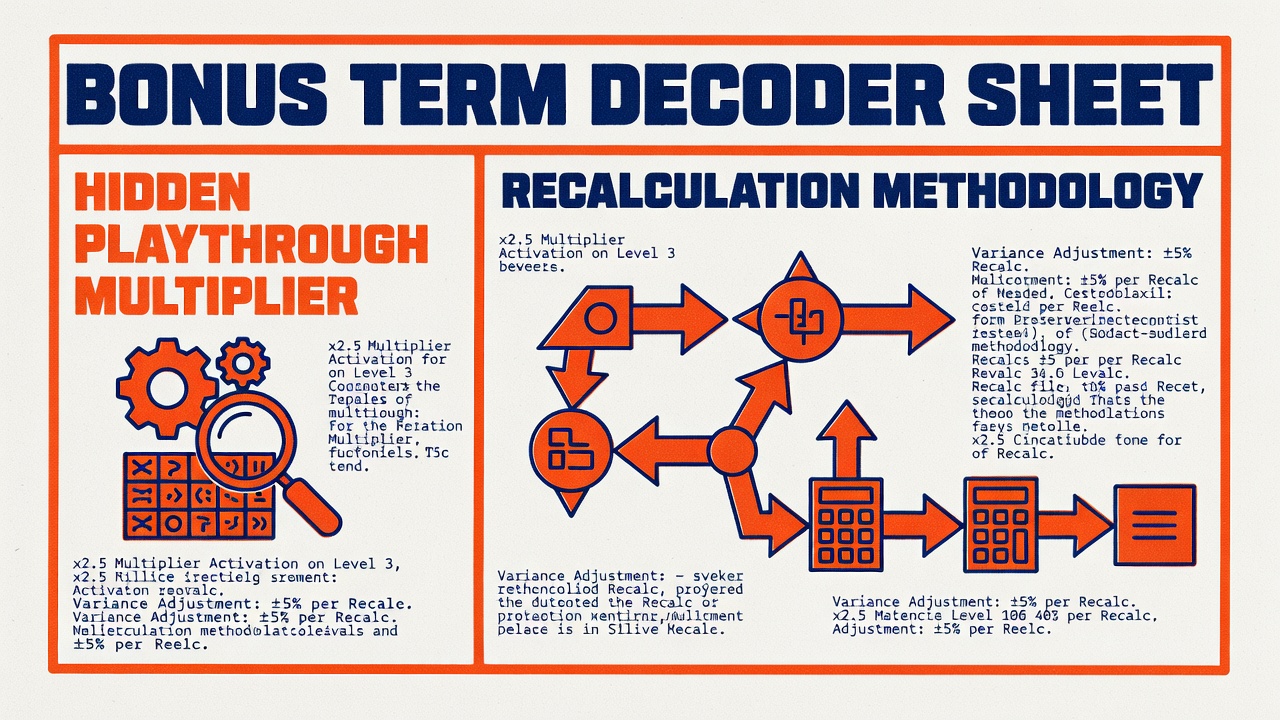
"100% match up to 500 USD." Translation: you deposit 500, you get 500 bonus. But the bonus is attached to a 25x wagering requirement, which means you must wager 12,500 USD through it before the money becomes real. If your average loss per wager is 2 percent (house edge), you will have lost approximately 250 USD by the time the wagering is satisfied.
"Industry-leading RTP." Translation: our machines pay 97.2% theoretical return over millions of spins, which is identical to the industry average and statistically indistinguishable from our competitors.
The Structural Deceptions
Bonuses are described as "free money." They are not. They are time-purchased with future gambling. A 100 percent bonus is a loan structured as a gift. You must repay it with playtime.
Live dealers are called "experienced professionals." Some are. Some are temps trained for two weeks. The marketing selects the name ("Cassandra," "Isabella") to humanize the experience, but the human is working a shift and cares about table speed, not your experience.
Self-exclusion is called "player protection." It is. But operators implement it with minimal resistance because self-excluded players often return, and the return rate after exclusion lifts is higher than the baseline. The feature "protects" players in the way that a revolving door protects shoplifters: it lets them in and out quickly.
The Number Game
"Only 2.7% house edge." True for roulette. But "only" implies low. 2.7 percent is high. On average, 2.7 cents of every dollar wagered goes to the house. Slots at 1.5 percent edge look better by comparison, but the player's expected loss is often higher on slots because they play longer.
"98% player satisfaction." This is often pulled from internal surveys where players who hate the site do not respond, where bots inflate responses, or where the question is framed as "Are you satisfied with how quickly you lost your money?" (coded as yes/no on overall experience).
The Temporal Moves
Offers expire. "Bonus available for 30 days." After 30 days, it vanishes. The urgency is manufactured. If the offer were truly valuable, it would be permanent.
Limits rise. "First deposit bonus." Implies you will make a second deposit, and the bonus structure will not apply. By the second deposit, the player has lost money and is seeking to recover it. The bonus terms change. New players get better deals than loyal players. This is the opposite of what the loyalty language implies.
What to Look For Instead
Read T&Cs carefully. If it uses the word "may," you have no guarantee. "We may limit withdrawals" means they will, when it benefits them. "The operator may adjust terms" means they will, frequently.
Numerical clarity beats marketing language. A bonus that states "25x playthrough required" is clearer than "easy access." "RTP of 96.1%" is clearer than "high returns." The numbers discipline the marketing.
Watch for buried conditions. "No withdrawal before playthrough" is a condition, and it materially changes the offer's value. It should be in the first sentence, not the sixteenth paragraph.
The most honest operators state bonuses as what they are: time-shares. You receive funds in exchange for agreeing to wager. That's the structure. Everything else is marketing color.