I ran surveillance at three casinos for twenty years. I worked the sports betting area where people place hockey bets. Most of them had no idea what they were doing. They looked at standings. They looked at recent wins and losses. They did not look at which goalie was playing.
This is the single biggest mistake people make when betting hockey. The goalie is the single most important variable in hockey. A great goalie can steal a game a team should lose. A bad goalie can lose a game a team should win.
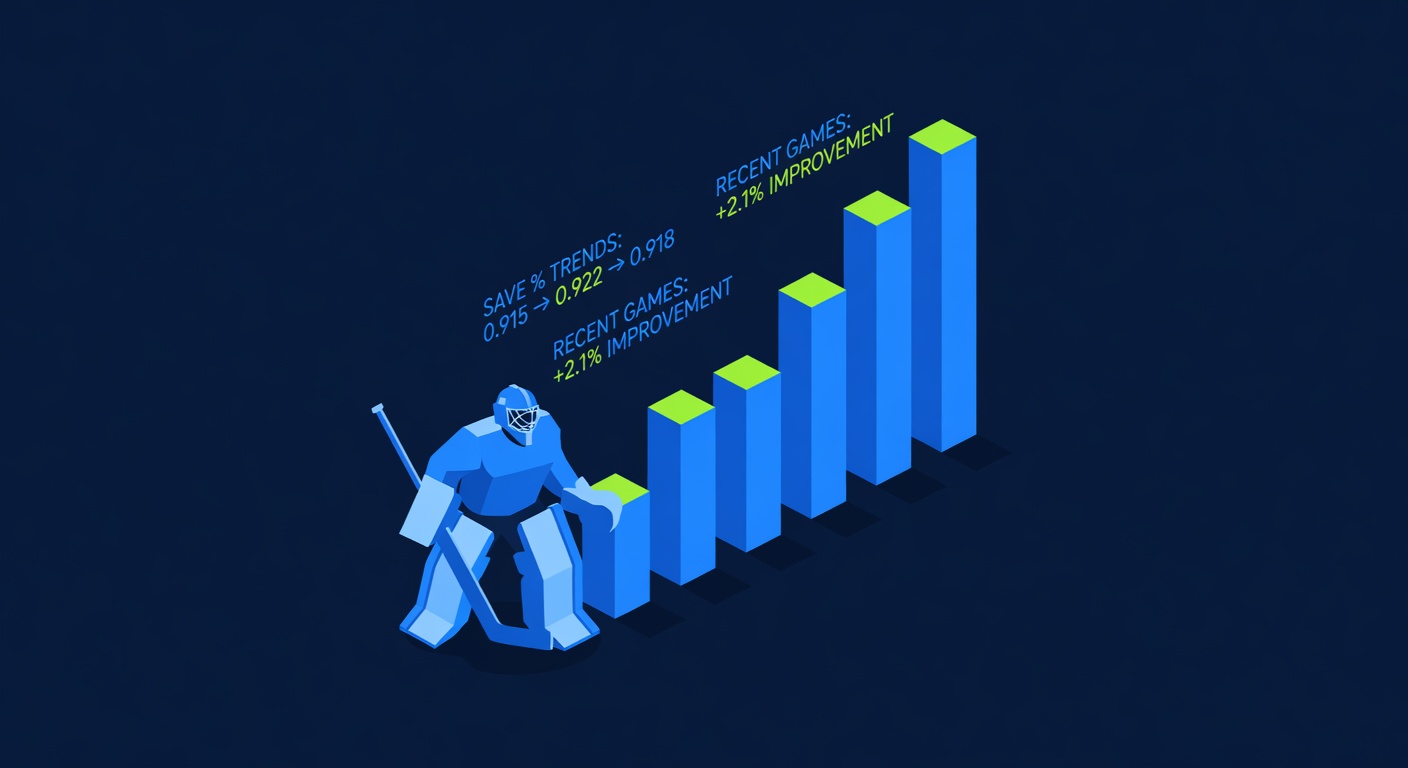
Here is what matters: recent save percentage. Not all-season save percentage. Recent. A goalie who was terrible in October but has been incredible in November is a different goalie. The team with the hot goalie is more likely to win.
Second: back-to-back games. Hockey teams often play two games in two nights. The first game goalie is usually rested. The second game goalie is sometimes fatigued. A fatigued goalie performs worse. If the team with the worse goalie is playing the second game of a back-to-back, they are in a tough spot.
Third: goalie matchups. Some goalies historically perform better against specific teams. If you see a goalie who has a 92 percent save percentage in games against a specific opponent over the past two years, that is meaningful information.
Fourth: injury status. A goalie who has been dealing with a nagging injury plays worse than a healthy goalie, even if the goalie has not missed a game.
Fifth: rest days. A goalie who has had three days off plays better than a goalie who played last night. This seems obvious but most people do not check when the goalie last played.
Here is what most people do: they see that Team A is 8-2 and Team B is 4-6 and they bet on Team A. They do not check if Team A's goalie is having a terrible week. They do not check if Team B's goalie just came back from injury and is playing well.
If you are going to bet hockey, learn the goalies. Learn their recent performance. Learn their injury status. Learn when they last played. This information is as important as the team records.
The deeper question to ask yourself is whether you are truly understanding the mechanism or just accepting the narrative. Understanding requires effort. It requires questioning assumptions.
When you apply this thinking consistently, your decision-making improves. You stop accepting explanations at face value. You dig into the mechanics.
The key insight here is recognizing that surface-level understanding misses crucial details. When you take time to examine how things actually work, you see patterns that others miss. This gives you an advantage. The advantage comes from doing the work that most people skip.
Consider how this applies to your own situation. Think about where you have seen this pattern before. Understanding the pattern means you can predict and prepare for it. Knowledge is power because knowledge removes uncertainty.
The long-term benefit of understanding these mechanisms compounds over time. Every decision you make using this knowledge is better informed. The small improvements accumulate and create meaningful differences in your outcomes. This is why taking time to truly understand matters.
This insight applies broadly across similar situations and contexts.