You ever sit next to a poker player who keeps a bankroll envelope stuffed with exactly three hundred dollars in twenties? That's not paranoia. That's stop loss in its purest form, and it's older than the internet.
I had a seat next to a guy named Mitchell at the Borgata back in 2015, must've been a Thursday afternoon, three in the summer, the kind of day where the casino floor glows empty like a church at dawn. Mitchell was a accountant from Morristown. He told me he'd come to play blackjack, but only if he brought exactly five hundred in chips. If he lost four hundred, he left. If he won three hundred, he left. Non-negotiable. He'd been doing this for a decade.
Mitchell sat for six hours that day and never wagered more than a hundred of his bankroll. Won two hundred overall. Packed it in at five fifteen and drove home.
Why does this matter? Because Mitchell understood something that most players never figure out: the house edge doesn't care about your emotional state. A 2.5% edge on blackjack is a 2.5% edge whether you're up a thousand or down two. But a stop-loss rule changes something else: it changes when the game ends.
How Stop Loss Actually Works
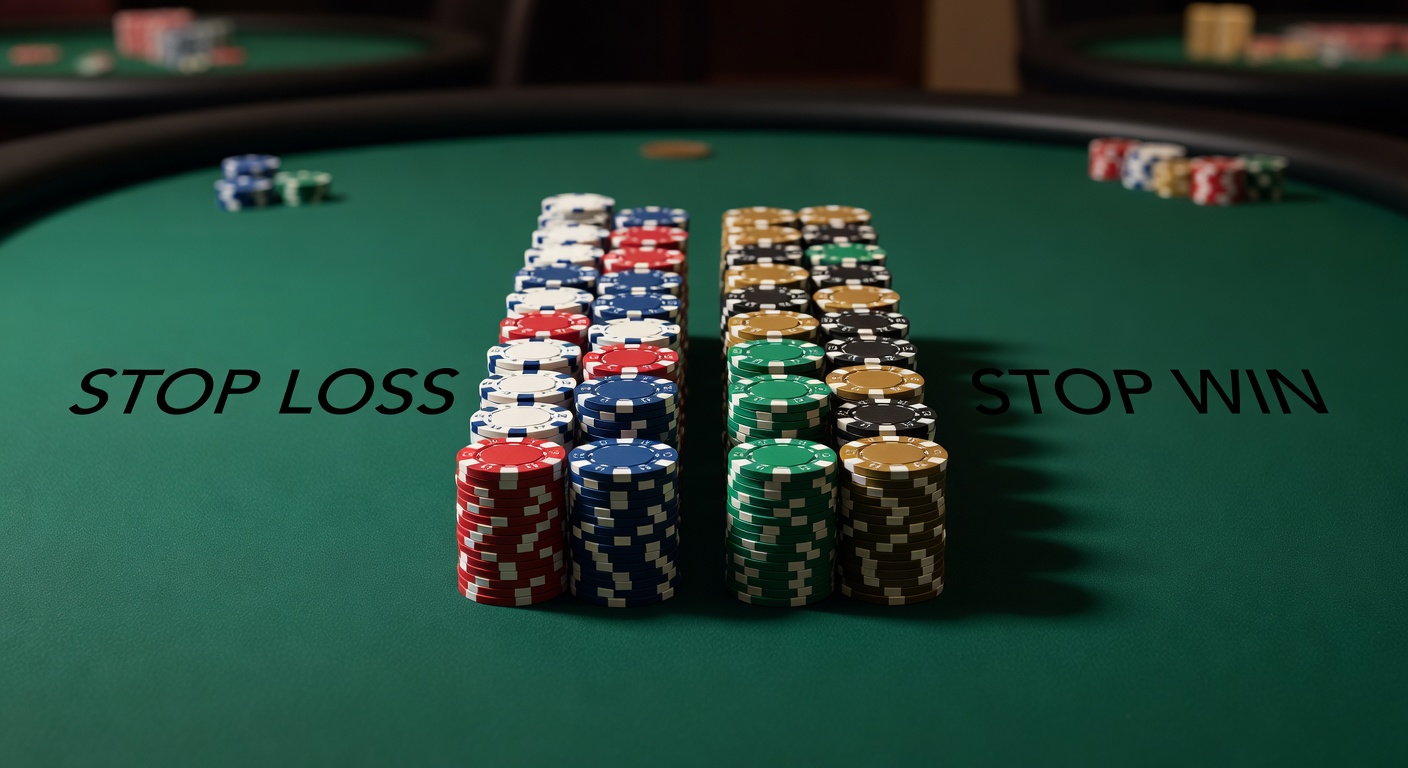
A stop loss is a hard limit on losses. You bring a thousand dollars. You lose six hundred. You leave. Done. No bargaining with yourself about doubling down to catch up, no "just one more hand."
The mechanics are simple enough. But here's where it gets human: most players think the stop loss saves them money by forcing discipline. It doesn't. What it does is truncate the downside variance. If you're a blackjack player with a 0.5% edge against you (roughly the average, depending on your basic strategy), playing six hours costs you differently than playing three. The house grinds you down over time. A stop loss just means you stop showing up.
A stop win is the inverse: you win three hundred, you leave. You protect the win. You pocket it.
Neither rule actually beats the math. Neither one reverses a negative expectation. But both do something real: they interrupt the game's default outcome.
Why We Think They Work
Gambling researchers call this "loss aversion," and it's not irrational. A loss of a hundred dollars feels twice as bad as a win of a hundred dollars feels good. That's documented. So a stop loss rule says: I will never experience the worst version of this game. I will leave before it gets truly ugly.
Stop win rules work on a different psychological principle: "crystallizing the gain." Once you win, you're done. The money is safe. It can't vanish if you keep playing. And that feels good.
The casinos understand this perfectly. They don't forbid stop-loss rules because the rules don't change the fundamental math. A player with a negative expected value over time will still have a negative expected value in the short term. The stop-loss just means they leave earlier, having lost less total capital.
The Research
Studies on problem gambling show that players without any loss limits end up losing more, period. Not as a percentage of their original bankroll, but in absolute terms, because they keep going. A 2017 study in the Journal of Gambling Studies found that players with self-imposed betting limits showed lower rates of problematic gambling behaviors. But that's a selection effect: people disciplined enough to set limits are also people less likely to gamble away their rent money.
What about actual casino data? Hard to find published research on this, but anecdotally, casinos see different play patterns from disciplined players. They play shorter sessions. They're less profitable per visit. Over a year, though, they're more reliable customers because they don't destroy their bankrolls in one catastrophic session.
The Real Lesson
Mitchell came back to the Borgata for another decade after that afternoon. I saw him twice more, both times with his five-hundred-dollar envelope. He never mentioned whether he was ahead or behind overall. But he was still playing. Still showing up.
A stop loss doesn't change the game. It changes how long you can stay in the game. If the game's math is against you, a stop loss just extends your timeline to ruin. If you're somehow favored, a stop loss limits your upside.
What a stop loss does do, the thing that actually matters, is this: it forces you to decide your session beforehand, when your judgment is still clear. Not at two in the morning when you're down a grand and convinced you're one hand away from recovering it all.
The limit doesn't beat the casino. But setting it might beat yourself.